Teething is one of those baby milestones parents hear about long before it actually happens. Then suddenly your calm baby starts drooling more, chewing everything, waking more often, or becoming extra fussy — and you begin wondering: is this teething?
The truth is that teething symptoms can look different from baby to baby. Some babies barely notice it, while others become noticeably uncomfortable for a few days.
This guide explains the most common teething symptoms in babies, what is considered normal, what symptoms may not actually be caused by teething, and when it may be time to check with your child’s doctor.
Table of Contents
When Do Babies Start Teething?
Most babies begin teething between 4–7 months, although some start earlier or later.
Typical order of baby teeth:
🦷 Bottom front teeth (lower central incisors)
🦷 Top front teeth
🦷 Teeth beside front teeth
🦷 First molars
🦷 Canines
🦷 Second molars
Remember: every baby develops differently.
10 Common Teething Symptoms in Babies
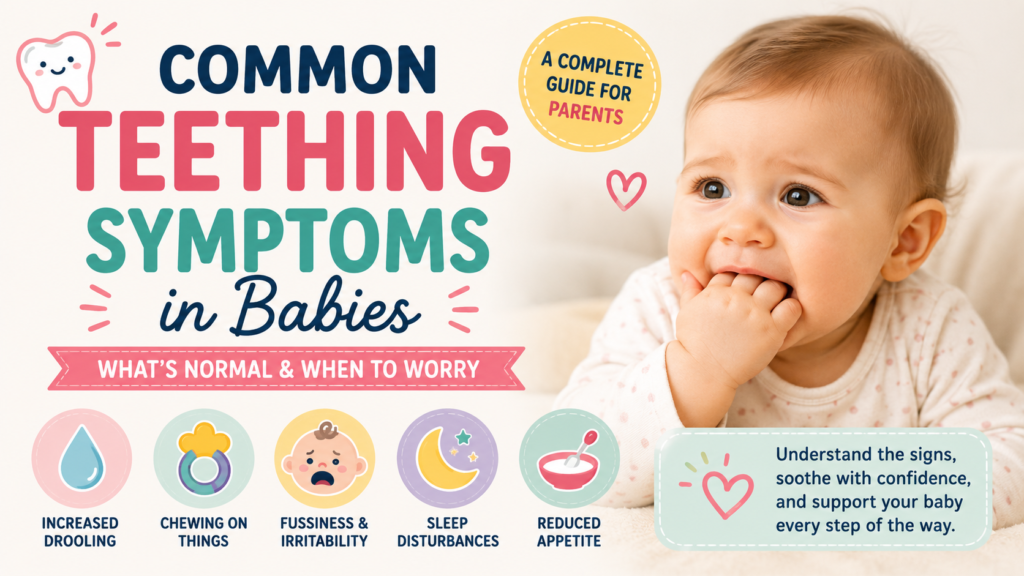
1. Increased Drooling
One of the earliest signs of teething is extra drooling.
You may notice:
- Wet shirts
- More saliva around the mouth
- Damp sleep areas
- Frequent chewing
Extra drool happens because babies produce more saliva during this stage.
Helpful Tips:
✔ Use soft bibs
✔ Gently wipe face
✔ Change wet clothes often
2. Chewing and Biting Everything
Babies often chew because pressure on the gums may feel soothing.
You might notice your baby chewing:
- Fingers
- Toys
- Teethers
- Blankets
- Clothing
Offer safe, age-appropriate teething toys. Safe teething toys can help.
Avoid anything small or difficult to clean.
3. Swollen or Sensitive Gums
Before a tooth appears, gums may look:
- Slightly swollen
- Pink
- Sensitive to touch
Some babies may pull away during feeding because of gum discomfort.
Sometimes you may even see a white spot where the tooth is preparing to emerge.
Not every baby shows visible gum changes.
4. Fussiness or Irritability
Many babies become temporarily more clingy or fussy.
Possible reasons:
- Gum pressure
- Sleep disruption
- General discomfort
Extra cuddles and comfort can help.
5. Changes in Sleep
Teething discomfort sometimes interrupts sleep.
You may notice:
- More night waking
- Short naps
- Difficulty settling
Keep routines calm and consistent.
6. Mild Appetite Changes
Some babies temporarily eat less.
You may notice:
- Shorter feeds
- Less interest in solids
- More comfort feeding
Continue offering feeds without pressure.
7. Ear Pulling or Cheek Rubbing
Teething discomfort may sometimes be felt nearby.
Babies may:
- Rub cheeks
- Pull ears
- Touch their face more
If accompanied by fever or illness symptoms, talk with your doctor.
8. More Mouthing Behavior
Babies naturally explore with their mouths, but teething may increase this.
You may notice:
- Constant chewing
- Increased sucking
- Wanting to bite objects
9. Mild Temperature Increase
Some babies feel slightly warmer.
However:
Teething should not cause a true fever.
A temperature of 100.4°F (38°C) or higher in babies under 3 months should be medically evaluated.
10. Temporary Restlessness
Babies may appear:
- More unsettled
- Harder to soothe
- More attached than usual
This phase usually passes.
Next read: Common Newborn Skin Issues Every New Mom Should Know
Symptoms Often Blamed on Teething (But May Need Attention)
Teething often gets blamed for everything.
But these symptoms should not automatically be assumed to be teething:
❌ High fever
❌ Vomiting
❌ Severe diarrhea
❌ Wheezing
❌ Significant illness symptoms
❌ Refusing all feeds
If these happen, look beyond teething.
How to Comfort a Teething Baby
Try these gentle approaches:
Cool Washcloth
Offer a clean cool washcloth to chew.
Teething Toys
Choose age-appropriate options.
Gentle Gum Massage
Use clean hands.
Extra Comfort
Rocking, cuddles, and quiet time help.
Cold Foods (Older Babies)
For babies already eating solids, chilled foods may feel soothing.
Avoid unsafe teething products unless approved by your child’s doctor.
Helpful guide: How to Relieve Gas in Babies Fast
Teething and Sleep: What Parents Should Know
If your baby suddenly sleeps differently during teething:
- Keep bedtime predictable
- Avoid overstimulation
- Offer comfort without introducing habits you don’t want long term
Temporary changes are common.
Teething Timeline Snapshot
4–7 Months → Early signs may begin
6–10 Months → First teeth common
9–16 Months → More teeth appear
16–24 Months → Molars often arrive
Every baby follows their own timeline.
When to Contact Your Doctor
Seek medical advice if your baby:
- Has fever
- Is unusually sleepy
- Stops feeding
- Shows signs of dehydration
- Seems unusually uncomfortable
- Has symptoms that don’t feel typical
Trust your instincts.
Final Thoughts
Teething can feel overwhelming at first, especially when you are trying to figure out whether your baby is tired, hungry, sick, or simply uncomfortable.
Most common teething symptoms in babies are temporary and manageable with comfort, patience, and simple soothing techniques.
Your baby doesn’t need perfection—they need support, reassurance, and time.
Also read: Why Your Baby Is Crying (0–6 Months)
FAQs
What are the first signs of teething?
Drooling, chewing objects, fussiness, and swollen gums are often early signs.
How long do teething symptoms last?
Symptoms may appear a few days before and shortly after a tooth erupts.
Does teething cause fever?
Teething may cause mild warmth but should not cause a true fever.
Can teething affect sleep?
Yes, some babies temporarily wake more often or settle less easily.
What helps soothe teething babies?
Teethers, gum massage, cuddles, and maintaining routines may help.
Explore More By Categories
you may also like
- 20 Easy Baby Breakfast Ideas for 6–12 Months

- 200+ Vintage Baby Girl Names With Beautiful Meanings

- 30 Kids Party Food Ideas Everyone Will Love

- 100+ Vintage Baby Boy Names With Cool Meanings

- Storage Tips for Homemade Baby Food: A Safe & Easy Guide for Parents

- 100+ Cultural & Modern Dhanu Rashi Baby Boy Names With Wonderful Meanings