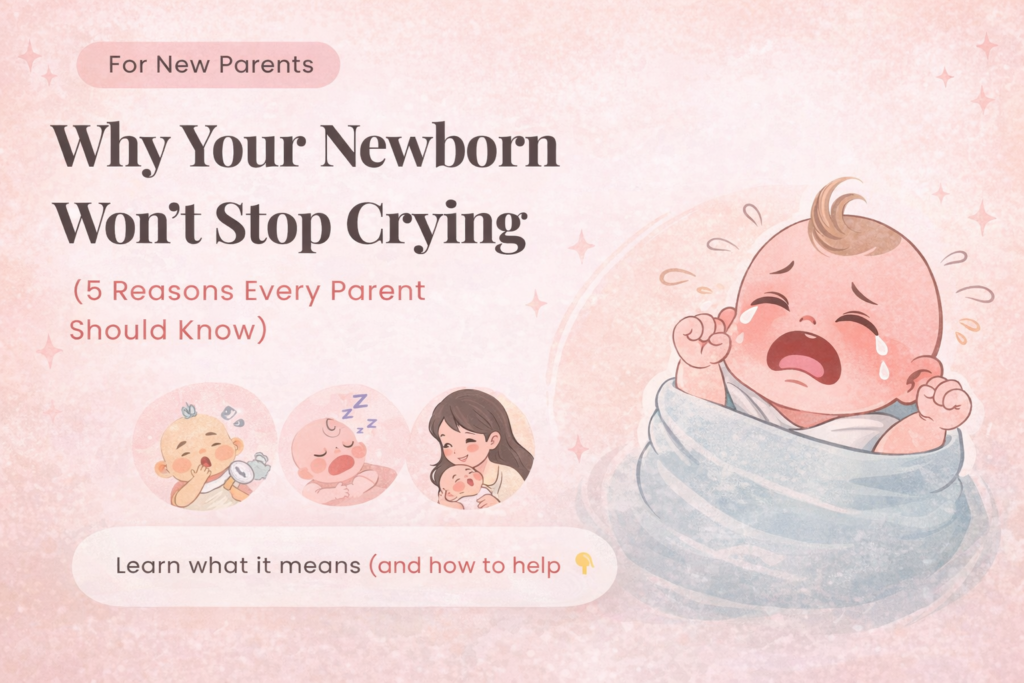
If your baby won’t stop crying, you’re not alone. For new parents, this can feel overwhelming, confusing, and even stressful.
The truth is—crying is your baby’s only way to communicate. Once you understand the reason behind it, everything becomes easier.
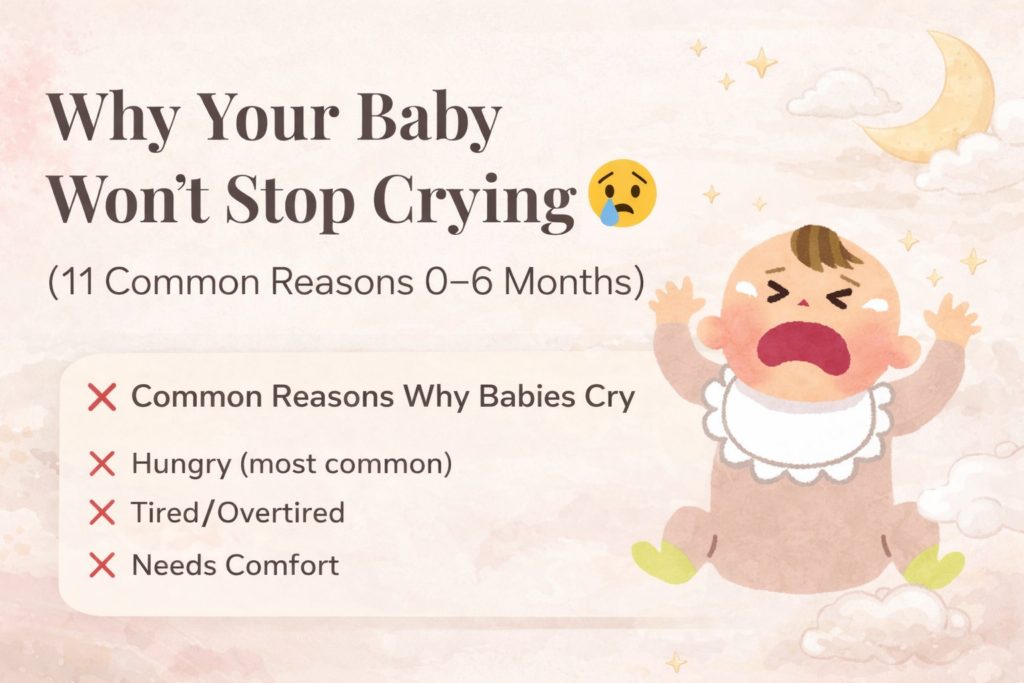
In this guide, you’ll learn the 11 most common reasons why babies cry and what you can do to soothe them quickly.
👶 Why Do Babies Cry So Much?
During the first 0–6 months:
- Babies can’t talk
- They rely completely on caregivers
- Crying is their primary communication tool
👉 Every cry has a reason—it’s just about decoding it.
🚫 11 Reasons Why Your Baby Is Crying (And What It Means)
1. Hunger (Most Common Reason)
This is the #1 reason babies cry.
👉 Signs:
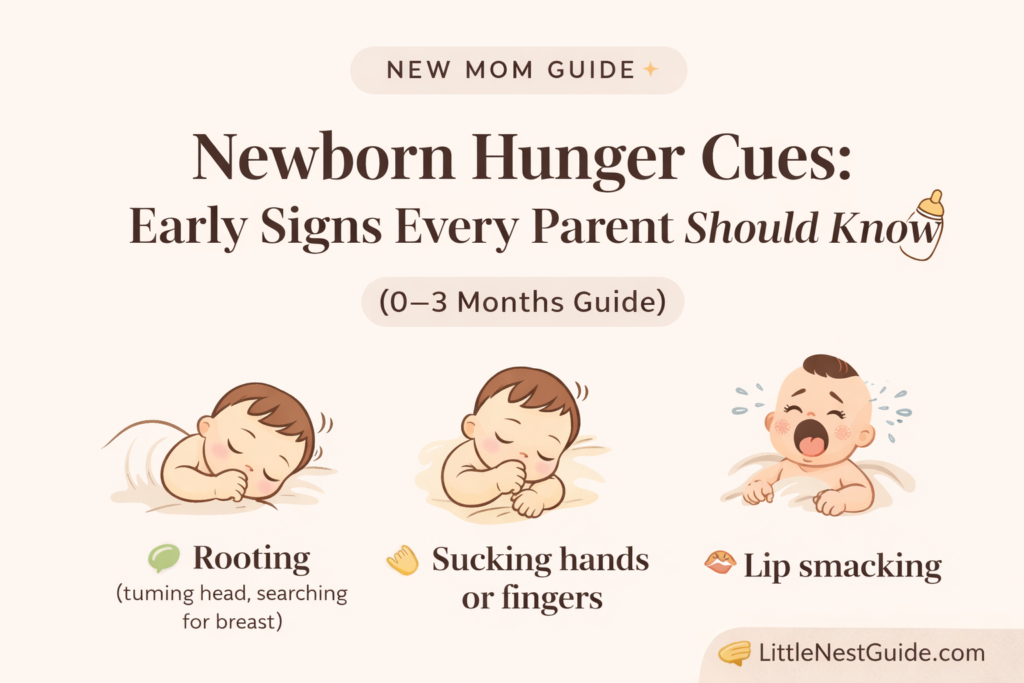
- Rooting (turning head searching for milk)
- Sucking fingers
- Fussiness
✅ What to do:
Feed your baby as soon as you notice early hunger cues.
2. Gas or Tummy Pain
Gas can make babies very uncomfortable.
👉 Signs:
- Pulling legs toward tummy
- Crying after feeding
- Arching back
✅ What to do:
- Burp your baby after feeds
- Gentle tummy massage
- Bicycle leg movement
3. Tired or Overtired
Overtired babies cry more and sleep less.
👉 Signs:
- Rubbing eyes
- Yawning
- Fussiness
✅ What to do:
Follow age-appropriate wake windows and put baby to sleep early.
4. Needs Burping
Sometimes babies cry simply because of trapped air.
👉 Signs:
- Fussiness during/after feeding
- Squirming
✅ What to do:
Pause feeding and burp your baby gently.
5. Wet or Dirty Diaper
A simple but common reason.
👉 Signs:
- Sudden crying
- Restlessness
✅ What to do:
Check and change diaper regularly.
6. Too Hot or Too Cold
Babies are sensitive to temperature.
👉 Signs:
- Sweating or cold hands/feet
- Irritability
✅ What to do:
Dress your baby in comfortable layers (not too much, not too little).
7. Needs Comfort or Closeness
Sometimes your baby just wants YOU ❤️
👉 Signs:
- Stops crying when held
- Wants to be carried
✅ What to do:
- Hold, cuddle, or rock your baby
- Skin-to-skin contact helps a lot
8. Overstimulation
Too much noise, light, or activity can overwhelm babies.
👉 Signs:
- Turning head away
- Crying in busy environments
✅ What to do:
Move to a calm, quiet space with dim lighting.
9. Teething (Later Months)
Usually starts after 3–4 months.
👉 Signs:
- Drooling
- Chewing on hands
- Irritability
✅ What to do:
Offer a teether or gently massage gums.
10. Growth Spurts
Babies go through rapid development phases.
👉 Signs:
- Increased hunger
- Extra fussiness
- Frequent waking
✅ What to do:
Feed on demand and give extra comfort.
11. Feeling Unwell
Sometimes crying indicates discomfort or illness.
👉 Signs:
- Fever
- Unusual crying pattern
- Low energy
⚠️ What to do:
Consult a pediatrician if something feels off.
🌙 How to Calm a Crying Baby (Quick Tips)
✔ Feed if hungry
✔ Check diaper
✔ Burp your baby
✔ Hold and comfort
✔ Reduce noise and lights
✔ Rock or gently sway
👉 Most importantly: stay calm—your baby can feel your energy.
🔗 Related Read (Important)
Struggling with sleep too?
👉 Read: Newborn Sleep Mistakes to Avoid (0–3 Months Guide)
(This will help you understand how sleep affects crying 👶)
💛 Final Thoughts
Crying is normal—but understanding why makes parenting so much easier.
With time, you’ll start recognizing your baby’s patterns and responding with confidence.
Remember: You’re learning, and that’s enough ❤️
📌 Save This for Later
Save this guide so the next time your baby cries, you’ll know exactly what to do 💛