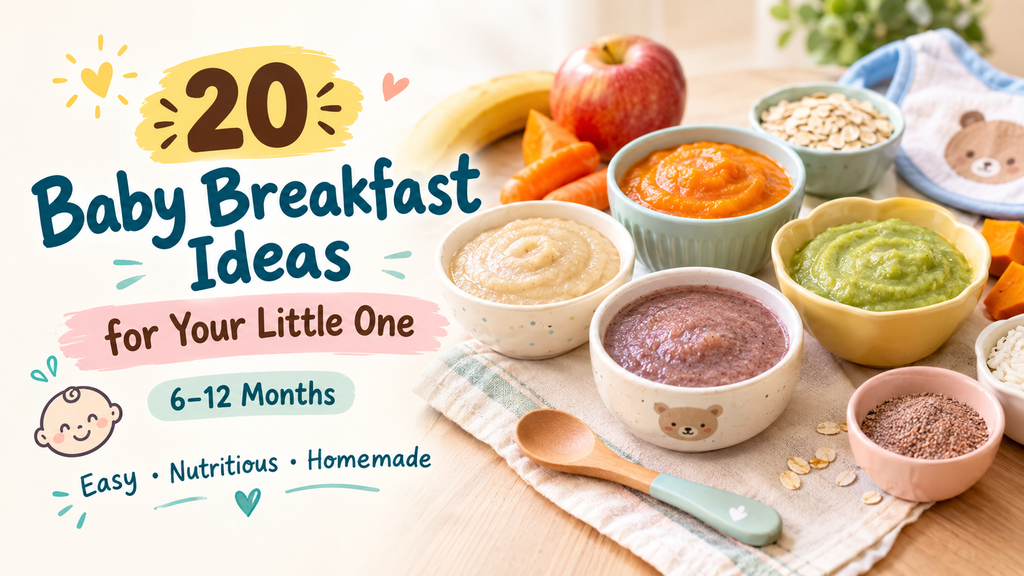
Starting solids can feel overwhelming, especially when you’re trying to think of something nutritious for breakfast every morning. The good news is that baby breakfast doesn’t have to be complicated.
With a few simple ingredients such as fruits, oats, ragi, rice, lentils, vegetables, yogurt, and healthy fats, you can create plenty of homemade breakfast options for your little one.
This guide shares 20 easy homemade baby breakfast ideas for 6–12 months, all designed in a soft puree or spoon-friendly format.
Whether your baby is just starting solids at 6 months or is closer to 12 months, you can adjust the consistency according to their developmental stage.
Important: These recipes are general ideas for babies who are developmentally ready for complementary foods. Breast milk or infant formula continues to be an important source of nutrition during the first year. Complementary foods should be introduced around 6 months, starting with small amounts and gradually increasing variety and consistency.
Table of Contents
What Makes a Good Baby Breakfast?
A good baby breakfast doesn’t need to be elaborate.
Ideally, it can include one or more of these:
- Whole grains
- Fruits
- Vegetables
- Lentils or other protein-rich foods
- Full-fat plain yogurt where appropriate
- Egg or other age-appropriate protein
- Healthy fats such as ghee or smooth nut/seed butter when safely introduced
WHO recommends a diverse diet for children 6–23 months, including fruits and vegetables and regular sources of protein.
For younger babies, you can blend or puree ingredients until smooth. As your baby’s skills develop, gradually make the puree thicker and less smooth.
20 Homemade Baby Breakfast Ideas for 6–12 Months
1. Banana Oats Puree
Banana and oats make a simple, naturally sweet breakfast for babies.
Ingredients
- ½ ripe banana
- 2 tablespoons oats
- Water or breast milk/formula as appropriate
How to make it
Cook the oats until very soft. Allow them to cool slightly, then blend with banana until smooth. Add a little liquid if needed to achieve a soft puree.
Best for: 6+ months
Tip: Use plain oats without added sugar or flavoring.
2. Apple Oats Puree
Apple adds natural sweetness while oats provide a filling grain base.
Ingredients
- ½ small apple
- 2 tablespoons oats
- Water
How to make it
Peel and steam the apple until soft. Cook the oats separately until completely tender. Blend both together with enough water to create a smooth puree.
Best for: 6+ months
You can gradually make this thicker as your baby becomes comfortable with different textures.
3. Pear Rice Puree
Pear and rice make a mild combination that’s easy to prepare.
Ingredients
- ½ ripe pear
- 2 tablespoons cooked rice
- Water
How to make it
Steam the pear until soft. Blend it with thoroughly cooked rice and a little warm water until smooth.
Best for: 6+ months
Pear can also be useful when you’re looking for fruit-based breakfast ideas.
4. Ragi Banana Porridge
Ragi is a popular grain used in Indian baby food recipes.
Ingredients
- 1–2 teaspoons ragi flour
- ½ ripe banana
- Water
How to make it
Cook the ragi flour thoroughly with water, stirring continuously to prevent lumps. Once cooked and slightly cooled, blend with banana.
Best for: 6+ months
Tip: Avoid adding sugar or honey. WHO recommends avoiding added sugars in complementary foods.
5. Sweet Potato Puree
Sweet potato has a naturally sweet flavor and creamy texture.
Ingredients
- ½ small sweet potato
- Water or breast milk/formula as appropriate
How to make it
Steam or boil the sweet potato until completely soft. Blend until smooth, adding a little water if needed.
Best for: 6+ months
You can later combine sweet potato with other foods your baby has already tried.
6. Apple Banana Puree
This is one of the easiest fruit combinations for breakfast.
Ingredients
- ½ apple
- ½ banana
How to make it
Steam the apple until soft. Blend with the ripe banana until smooth.
Best for: 6+ months
There’s no need to add sugar because both fruits provide natural sweetness.
7. Moong Dal Rice Puree
For a more savory breakfast, try a simple rice and moong dal combination.
Ingredients
- 1 tablespoon rice
- 1 tablespoon yellow moong dal
- Water
- A tiny amount of ghee if already introduced
How to make it
Wash the rice and dal thoroughly and cook until very soft. Blend with extra water until you reach a smooth puree.
Best for: 6+ months
This can be a useful way to introduce a combination of grain and pulse into your baby’s diet.
8. Pumpkin Oats Puree
Pumpkin has a naturally mild and slightly sweet flavor.
Ingredients
- ¼ cup cooked pumpkin
- 1–2 tablespoons oats
- Water
How to make it
Cook the oats until soft and steam the pumpkin until tender. Blend both ingredients together.
Best for: 6+ months
This is an easy breakfast to prepare in batches.
9. Avocado Banana Puree
Avocado provides healthy fats, while banana adds natural sweetness.
Ingredients
- ¼ ripe avocado
- ½ ripe banana
How to make it
Mash or blend both ingredients until smooth.
Best for: 6+ months
Because avocado doesn’t require cooking, this can be one of the quickest breakfast options for busy mornings.
10. Papaya Banana Puree
Soft ripe papaya blends easily with banana.
Ingredients
- ¼ cup ripe papaya
- ½ banana
How to make it
Remove seeds and peel from the papaya. Blend with banana until smooth.
Best for: 6+ months
Choose ripe, soft fruit and serve immediately.
11. Oats Pear Puree
This is another simple fruit-and-grain combination.
Ingredients
- 2 tablespoons oats
- ½ ripe pear
- Water
How to make it
Steam the pear and cook the oats until soft. Blend together with a little water.
Best for: 6+ months
As your baby gets older, you can make the mixture thicker rather than completely smooth.
12. Carrot Rice Puree
Carrot and rice create a mild savory breakfast.
Ingredients
- 1 small carrot
- 2 tablespoons cooked rice
- Water
How to make it
Steam the carrot until completely soft. Blend it with cooked rice and enough water to create a smooth puree.
Best for: 6+ months
This can also work as a simple lunch option.
13. Apple Ragi Puree
Combine fruit with ragi for a nutrient-rich breakfast option.
Ingredients
- 1–2 teaspoons ragi flour
- ½ small apple
- Water
How to make it
Steam the apple until soft. Cook the ragi thoroughly with water. Blend them together until smooth.
Best for: 6+ months
This recipe doesn’t need sugar because the apple provides natural sweetness.
14. Banana Rice Puree
If your baby already tolerates rice and banana separately, combining them can make a quick breakfast.
Ingredients
- ½ banana
- 2 tablespoons cooked rice
- Water
How to make it
Blend the cooked rice and banana with a little water until smooth.
Best for: 6+ months
For older babies, you can leave the texture slightly thicker if they are ready.
15. Oats Pumpkin Puree
This is a great option when you want something other than fruit for breakfast.
Ingredients
- 2 tablespoons oats
- ¼ cup pumpkin
- Water
How to make it
Cook oats until soft and steam pumpkin until tender. Blend together until smooth.
Best for: 6+ months
You can add a small amount of ghee if it has already been introduced and is appropriate for your baby’s diet.
16. Plain Full-Fat Yogurt with Banana
Plain yogurt can make a quick breakfast when dairy has been introduced appropriately.
Ingredients
- 2–3 tablespoons plain full-fat yogurt
- ½ ripe banana
How to make it
Mash the banana and mix it thoroughly with plain yogurt.
Best for: babies who have already been introduced to these ingredients
Choose plain, unsweetened yogurt rather than flavored varieties with added sugar. CDC notes that yogurt without added sugar can be introduced before 12 months, while cow’s milk as a drink is not recommended before 12 months.
17. Egg & Sweet Potato Puree
For families introducing egg, this can be a protein-rich breakfast option.
Ingredients
- Well-cooked egg
- Cooked sweet potato
- Water as needed
How to make it
Cook the egg thoroughly. Combine it with soft cooked sweet potato and blend or mash to an age-appropriate consistency.
Best for: babies who have already been introduced to egg
Egg is one of the potentially allergenic foods that can be introduced when other complementary foods are introduced, according to CDC guidance. If your baby has severe eczema or an existing egg allergy, discuss introduction with their healthcare professional.
18. Moong Dal Vegetable Puree
This breakfast is a simple way to combine lentils and vegetables.
Ingredients
- 1 tablespoon moong dal
- A small amount of carrot or pumpkin
- Water
How to make it
Cook the dal and vegetables until completely soft. Blend together with water until smooth.
Best for: 6+ months
You can change the vegetable depending on what your baby has already tried.
19. Mango Oats Puree
When ripe mango is in season, it can be combined with cooked oats for a naturally sweet breakfast.
Ingredients
- ¼ cup ripe mango
- 1–2 tablespoons cooked oats
How to make it
Blend the ripe mango with cooled, cooked oats until smooth.
Best for: babies who have already been introduced to both ingredients
No sugar is needed.
20. Banana Ragi Oats Puree
This combination brings together three simple ingredients.
Ingredients
- ½ banana
- 1 teaspoon ragi flour
- 1 tablespoon oats
- Water
How to make it
Cook the ragi and oats thoroughly in water until soft. Allow the mixture to cool slightly, then blend with banana.
Best for: 6+ months
For older babies, gradually increase the thickness rather than keeping the mixture completely liquid.
How to Serve These Breakfasts by Age
Although this article focuses on purees, your baby’s texture should change as their skills develop.
6–7 Months
Start with smooth, soft purees if that’s what your baby manages comfortably.
Good choices include:
- Banana oats puree
- Apple puree
- Pear rice puree
- Sweet potato puree
- Pumpkin puree
Start with small amounts and let your baby gradually become familiar with eating from a spoon.
7–9 Months
You can gradually make purees thicker and introduce mashed or slightly textured foods as your baby becomes ready.
Try:
- Ragi banana puree
- Moong dal rice puree
- Oats pumpkin puree
- Avocado banana puree
- Egg sweet potato puree
CDC recommends gradually introducing thicker and lumpier textures as babies develop their feeding skills.
9–12 Months
You can still serve puree-style breakfasts, but consider making them thicker and less smooth if your baby is developmentally ready.
Examples:
- Thick banana oats
- Mashed avocado banana
- Thick ragi porridge
- Mashed sweet potato
- Thick moong dal and vegetable mash
Even if your blog is focused on puree recipes, it’s important not to imply that a 12-month-old should remain exclusively on smooth purees. Texture progression helps babies develop chewing and feeding skills.
How Much Breakfast Should a 6–12 Month Baby Eat?
There isn’t one perfect portion that every baby should finish.
When starting complementary foods, begin with small amounts and gradually increase as your baby becomes comfortable. WHO recommends 2–3 complementary meals per day for babies 6–8 months and 3–4 meals per day for babies 9–23 months, while continuing milk feeds.
Your baby’s appetite may also change from day to day.
Some mornings they may happily eat several spoonfuls, while on another day they may barely eat anything.
That’s normal.
Instead of insisting that your baby finish a specific amount, watch their hunger and fullness cues.
Confused about baby portion? Read our portion guide – 7 Proven Baby Portion Size Tips by Age (6–24 Months) for Stress-Free Feeding
Should You Add Sugar to Baby Breakfast?
No added sugar is necessary.
Fruits such as banana, pear, apple, mango, and papaya can naturally sweeten many baby breakfast recipes.
WHO recommends that salt and sugars not be added to complementary foods.
Avoid adding:
- White sugar
- Brown sugar
- Jaggery as a sweetener
- Syrups
- Sweetened cereals
- Flavored yogurt with added sugar
And importantly, never give honey to a baby under 12 months, because of the risk of infant botulism.
Wants to know natural sweetner for your baby’s meal here is some options – Naturally Sweet Baby Food Recipes (No Sugar Added)
Can You Add Ghee to Baby Breakfast?
A small amount of ghee can be incorporated into appropriate homemade foods if it fits your baby’s diet and has already been introduced.
For example, you could add a small amount to:
- Rice and dal puree
- Ragi porridge
- Sweet potato puree
- Oats
- Vegetable puree
However, ghee doesn’t need to be added to every meal. Focus on overall dietary variety.
What About Allergens?
Some common allergenic foods include egg, peanut/nut butters, wheat, fish, and shellfish.
Current CDC guidance recommends introducing potentially allergenic foods when other complementary foods are introduced rather than unnecessarily delaying them.
For example, a smooth peanut butter can be thinned appropriately and mixed into a suitable puree if your baby’s healthcare professional has not advised against it.
Never offer whole nuts to a baby because of choking risk.
If your baby has severe eczema, a known food allergy, or another medical concern, speak with their pediatrician before introducing allergens.
Baby Breakfast Safety Tips
Homemade food can be nutritious, but preparation and feeding safety are important.
1. Wash your hands
Wash your hands and use clean utensils before preparing baby food.
2. Cook foods thoroughly
Foods such as eggs, meat, lentils, and grains should be prepared appropriately and cooked until soft.
3. Avoid choking hazards
The texture and preparation of food matter. Babies should eat while sitting upright and supervised. Avoid hard, sticky, round, or otherwise unsafe pieces.
4. Don’t force-feed
If your baby turns away, closes their mouth, or loses interest, pause the meal.
Responsive feeding means paying attention to hunger and fullness cues rather than forcing a particular amount.
5. Don’t replace milk too quickly
During the first year, breast milk or infant formula remains an important part of your baby’s nutrition while complementary foods are introduced.
Simple 7-Day Baby Breakfast Plan
If you’re tired of deciding what to make every morning, here’s a simple rotation.
| Day | Breakfast |
|---|---|
| Monday | Banana oats puree |
| Tuesday | Apple ragi puree |
| Wednesday | Sweet potato puree |
| Thursday | Pear rice puree |
| Friday | Moong dal rice puree |
| Saturday | Avocado banana puree |
| Sunday | Pumpkin oats puree |
You can repeat favorite recipes and introduce new foods gradually.
There’s no need to create a completely different breakfast every day.
If you’r looking for 7 day baby meal plan, Read our guide – 7-Day Baby Meal Plan for 6–8 Months
How to Make Baby Breakfast Prep Easier
Busy mornings can make homemade baby food feel difficult, but a little preparation helps.
Prepare grains in advance
Cook small batches of oats, rice, or other suitable grains and store them safely.
Steam fruits and vegetables together
You can steam foods such as apple, pear, carrot, pumpkin, and sweet potato during meal prep.
Make small portions
Small portions make it easier to serve fresh food without unnecessary waste.
Keep a food-introduction list
Write down new foods your baby has tried. This can make it easier to notice which foods your baby likes or doesn’t tolerate.
Keep recipes simple
You don’t need five or six ingredients in every puree.
Two or three nutritious ingredients can make a perfectly good breakfast.
Final Thoughts
Breakfast for a 6–12-month-old doesn’t need to be complicated.
With simple ingredients such as banana, oats, ragi, rice, moong dal, apple, pear, sweet potato, pumpkin, avocado, and other age-appropriate foods, you can create plenty of nutritious homemade options.
The most important things are to:
- Start complementary foods around 6 months when your baby is developmentally ready
- Begin with small portions
- Offer a variety of foods
- Avoid added sugar and honey before 12 months
- Continue breast milk or infant formula
- Introduce textures gradually
- Follow your baby’s hunger and fullness cues
- Prepare foods in a safe, age-appropriate texture
And remember: you don’t need a perfect breakfast every morning.
Some days your baby may love breakfast. Other days they may take only a few spoonfuls. That’s part of learning to eat.
The goal during this stage is not just getting food into your baby’s tummy—it’s helping them explore different flavors, textures, and nutritious foods in a safe and positive way.
FAQs
1. What can I give my 6-month-old baby for breakfast?
You can start with simple, soft foods such as banana puree, apple puree, oats puree, sweet potato puree, rice cereal, or smooth vegetable and grain combinations. Start with small amounts and introduce foods according to your baby’s readiness.
2. Can a 6-month-old baby eat oats?
Yes, plain oats can be introduced as a complementary food around 6 months when the baby is ready for solids. Cook them thoroughly and serve as a smooth or soft puree initially.
3. Is banana good for a baby’s breakfast?
Yes. Ripe banana is soft and naturally sweet, making it easy to mash or puree. It can be combined with oats, avocado, rice, or other foods your baby has already tried.
4. Can I give ragi to my 6-month-old?
Ragi can be introduced as part of complementary feeding around 6 months. Cook ragi thoroughly and serve it in an appropriate smooth or soft consistency.
5. Should I add sugar to baby food?
No. Babies do not need added sugar. Fruits can provide natural sweetness, and WHO recommends avoiding added sugars in complementary foods.
6. Can babies have honey for breakfast?
No. Honey should not be given to babies under 12 months because of the risk of infant botulism.
7. How many meals should a 6-month-old have?
WHO recommends complementary foods 2–3 times a day for babies 6–8 months, gradually increasing frequency as babies get older. Breast milk or formula continues alongside complementary foods.
8. Should baby food stay completely smooth until 12 months?
Not usually. Smooth purees can be useful when starting solids, but babies should gradually experience thicker and more textured foods as their feeding skills develop.
9. Can I prepare baby breakfast in advance?
Yes, but homemade baby food should be prepared, cooled, stored, and reheated safely. Use clean containers and follow appropriate food-storage practices.
10. What if my baby refuses breakfast?
Don’t force your baby to eat. Try again later or offer another familiar food. Appetite can vary from day to day, and responsive feeding means paying attention to your baby’s hunger and fullness cues.
Explore More By Categories
- Baby care tips
- Baby Essentials
- Baby Feeding Guide
- Baby Names
- Healthy Racipe for mom
- Kids Birthday Ideas
- Kids Meal Ideas & Food Recipes
- Kids Songs, Rhymes & Stories
- Postpartum Care
- Toddler Learning & Daily Skills
You May Also Like this
- 20 Easy Baby Breakfast Ideas for 6–12 Months
- 200+ Vintage Baby Girl Names With Beautiful Meanings

- 30 Kids Party Food Ideas Everyone Will Love

- 100+ Vintage Baby Boy Names With Cool Meanings

- Storage Tips for Homemade Baby Food: A Safe & Easy Guide for Parents
- 100+ Cultural & Modern Dhanu Rashi Baby Boy Names With Wonderful Meanings