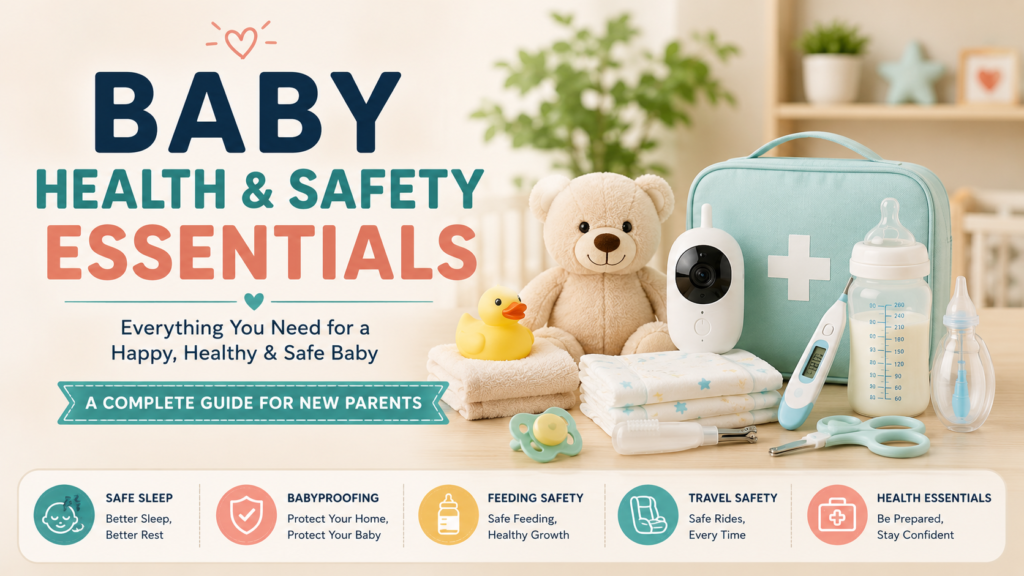
Bringing a newborn home is one of the most exciting moments for any family. Along with the joy comes the responsibility of keeping your baby healthy, safe, and comfortable every day.
Many first-time parents spend hours researching baby products, only to discover that they don’t need every item advertised online. Instead, focusing on a few practical baby health and safety essentials can help create a secure environment for your little one while giving you peace of mind.
This guide covers the most important baby health and safety products, safe sleep practices, babyproofing basics, and everyday tips to help protect your baby during the first year.
Table of Contents
Why Baby Health and Safety Essentials Matter
Babies are naturally curious and completely dependent on adults for their care and protection. Having the right baby health and safety essentials helps reduce risks while making everyday parenting easier.
These essentials help:
✔ Prevent accidents and injuries
✔ Monitor your baby’s health
✔ Create a safe sleep environment
✔ Support healthy feeding habits
✔ Make daily care routines smoother
The goal isn’t to buy more products—it’s to choose the right products that genuinely improve your baby’s safety and well-being.
Must-Have Baby Health Essentials
1. Digital Baby Thermometer
A reliable thermometer is one of the most important items every parent should have.
Babies can develop fevers unexpectedly, and a digital thermometer allows you to monitor their temperature accurately.
Look for:
- Easy-to-read display
- Fast readings
- Pediatric-friendly design
Keeping a thermometer at home can save unnecessary stress during late-night illnesses.
2. Nasal Aspirator
Newborns cannot blow their noses, which means congestion can affect feeding and sleep.
A nasal aspirator helps clear mucus gently and can make your baby much more comfortable.
It is especially useful during colds and seasonal illnesses.
3. Baby Nail Clippers or Nail File
Baby nails grow surprisingly fast and can easily scratch delicate skin.
Choose:
- Rounded-edge baby nail clippers
- Soft baby nail files
- Baby grooming kits
Many parents find trimming nails easier while the baby is sleeping.
4. Baby First Aid Kit
Every home should have a simple baby first aid kit.
Consider including:
- Digital thermometer
- Saline drops
- Cotton pads
- Baby-safe bandages
- Infant medicine dispenser
Having these items ready can help you respond quickly to minor health concerns.
5. Saline Drops
Saline drops can help loosen mucus and support easier breathing during congestion.
They are commonly recommended for babies experiencing stuffy noses.
Essential Baby Safety Products
1. Baby Monitor
A baby monitor provides peace of mind when your baby is sleeping in another room.
Modern baby monitors may include:
- Video monitoring
- Two-way audio
- Temperature tracking
- Night vision
You don’t need the most expensive option—reliable monitoring is what matters most.
2. Outlet Covers
As babies become mobile, electrical outlets become a potential hazard.
Outlet covers are inexpensive and effective for protecting curious little hands.
3. Safety Gates
Safety gates help block access to:
- Stairs
- Kitchens
- Unsafe rooms
Once babies begin crawling, safety gates quickly become one of the most useful babyproofing tools.
4. Furniture Anchors
Many parents overlook furniture safety.
Bookshelves, dressers, and televisions should be secured to prevent tipping accidents.
Furniture anchors are a simple way to make your home safer.
5. Cabinet Locks
Cleaning products, medicines, and sharp objects should always remain inaccessible.
Cabinet locks help prevent accidental access as babies become more curious.
Safe Sleep Essentials
Safe sleep practices are one of the most important parts of infant safety.
1. Firm Crib Mattress
Choose a firm mattress that fits the crib properly.
Avoid soft mattresses that may increase sleep risks.
2. Fitted Crib Sheets
Keep the sleep area simple.
Use:
✔ Tight-fitting sheets
✔ Proper crib sizing
Avoid loose bedding.
3. Wearable Sleep Sacks
Sleep sacks help keep babies warm without the need for loose blankets.
Many parents find them safer and more convenient than traditional blankets.
4. Crib or Bassinet
Your baby should sleep in a safety-approved crib or bassinet designed for infants.
Always follow manufacturer guidelines.
Feeding Safety Essentials
Feeding safety is another important aspect of infant care.
Starting solids soon? Read our Safe Feeding Tools for Babies (6–12 Months) guide to choose simple, practical feeding tools without overbuying.
1. BPA-Free Bottles
If bottle-feeding, choose BPA-free bottles from trusted brands.
Replace damaged bottles and nipples as needed.
If feeding feels uncomfortable due to gas or fussiness, explore our guide on 5 Best Anti-Colic Bottles for Gas Relief to compare beginner-friendly bottle options.
2. Bottle Cleaning Brush
Proper cleaning helps reduce bacteria buildup.
A dedicated bottle brush makes cleaning more effective.
3. High Chair with Safety Harness
Once your baby begins solids, a sturdy high chair becomes essential.
Look for:
- Safety straps
- Stable base
- Easy-to-clean surfaces
4. Silicone Feeding Tools
Food-grade silicone spoons, bowls, and bibs are gentle and practical for babies learning to eat solids.
Bath Time Safety Essentials
Bath time should be enjoyable and safe.
1. Baby Bathtub
A baby bathtub helps support your newborn securely during baths.
2. Soft Towels
Soft, absorbent towels help keep babies warm after bathing.
3. Gentle Baby Wash
Choose mild products designed specifically for babies.
Avoid harsh fragrances whenever possible.
4. Bath Thermometer
Water should feel warm—not hot.
A bath thermometer can help ensure safe bathing temperatures.
Travel Safety Essentials
Safety matters even when you’re away from home.
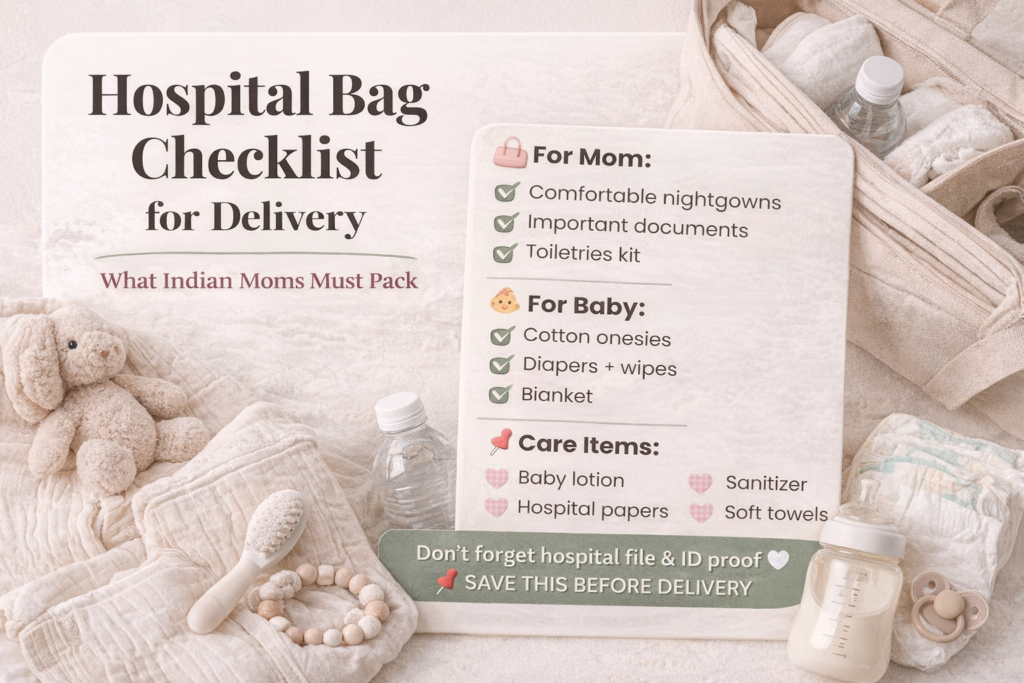
Preparing for delivery soon? You may also like:
→ When to Pack Your Hospital Bag
→ Hospital Bag Checklist for Delivery
Planning ahead can make the newborn stage feel calmer and help avoid last-minute packing stress.
1. Rear-Facing Infant Car Seat
A properly installed rear-facing car seat is one of the most important baby safety essentials.
Always follow local safety guidelines and manufacturer instructions.
2. Stroller with Safety Harness
Choose a stroller with secure straps and a stable frame.
Always use the harness correctly.
3. Portable Changing Mat
Portable changing mats help maintain hygiene during outings.
4. Diaper Bag Emergency Kit
Include:
- Diapers
- Wipes
- Extra clothes
- Sanitizer
- Small first aid supplies
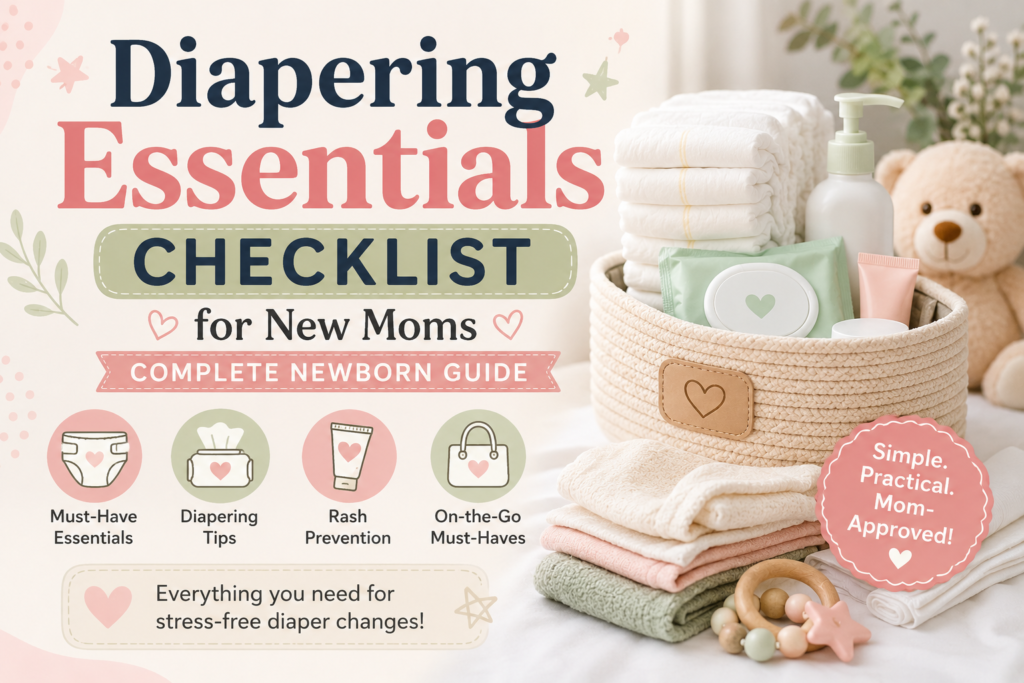
wants to know complete diaper bag checklist? checkout our diapering essentials checklist.
Home Babyproofing Checklist
As your baby becomes mobile, babyproofing becomes increasingly important.
Living Room
✔ Cover outlets
✔ Anchor furniture
✔ Remove small choking hazards
✔ Secure cords
Kitchen
✔ Install cabinet locks
✔ Store chemicals safely
✔ Keep sharp objects out of reach
Bathroom
✔ Store medicines securely
✔ Use non-slip bath mats
✔ Keep electrical items away from water
Nursery
✔ Keep crib free of loose items
✔ Secure furniture
✔ Monitor room temperature
Common Baby Safety Mistakes
Even experienced parents can overlook certain risks.
Overcrowding the Crib
Avoid:
- Pillows
- Loose blankets
- Stuffed animals
A simple sleep space is safest.
Skipping Furniture Anchors
Many household injuries involve unsecured furniture.
Leaving Small Objects Within Reach
Coins, batteries, and tiny toys can pose choking risks.
Delaying Babyproofing
Many parents start babyproofing after crawling begins.
It’s often easier to prepare before mobility increases.
Tips for Creating a Safe Environment
Keep Emergency Numbers Accessible
Store important medical contacts where everyone can find them.
Regularly Check Baby Gear
Inspect:
- Cribs
- Strollers
- Car seats
- Feeding products
Replace damaged items promptly.
Follow Product Instructions
Always use baby products according to manufacturer recommendations.
Stay Updated on Safety Recalls
Occasionally check for recalls affecting baby products you use.
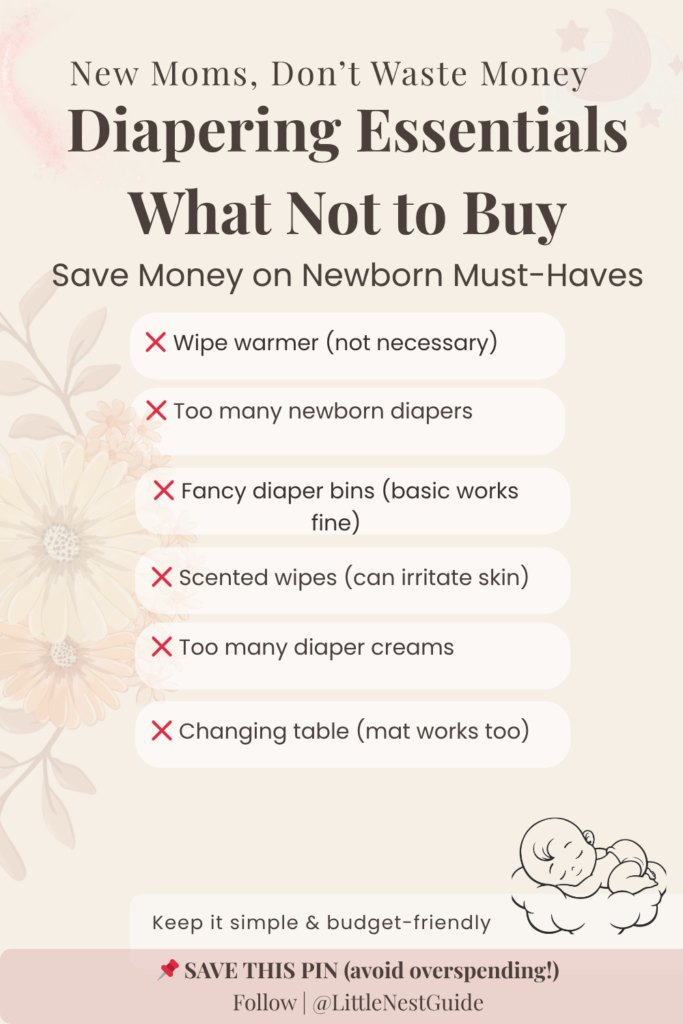
Many parents buy more than they actually need. Before shopping, read our Baby Products You Don’t Need guide and build a simpler setup.
Final Thoughts
Choosing the right baby health and safety essentials doesn’t require buying every product on the market.
Focus on practical items that help monitor your baby’s health, support safe sleep, encourage safe feeding, and create a secure environment at home.
The best approach is often the simplest one: prioritize safety, stay prepared, and make adjustments as your baby grows and reaches new milestones.
With a few thoughtful essentials and good safety habits, you’ll be well-equipped to provide a healthy and secure start for your little one.
FAQs
1. What are the most important baby health and safety essentials?
A digital thermometer, nasal aspirator, baby first aid kit, safe crib, baby monitor, car seat, and babyproofing products are among the most important essentials.
2. When should I start babyproofing my home?
It’s best to start babyproofing before your baby begins crawling, usually around 4–6 months of age.
3. Do newborns need a baby monitor?
A baby monitor is optional but can provide peace of mind, especially when your baby sleeps in a separate room.
4. What is the safest sleep setup for a newborn?
A firm mattress, fitted sheet, and an empty crib or bassinet without pillows, blankets, or stuffed toys are generally recommended.
5. Which baby safety products are worth buying?
Safety gates, outlet covers, cabinet locks, furniture anchors, and a quality rear-facing car seat are among the most useful safety products.
6. How often should I check baby products for safety?
Inspect cribs, strollers, car seats, feeding tools, and other baby gear regularly for damage, wear, or manufacturer recalls.
You may also like this
- 20 Easy Baby Breakfast Ideas for 6–12 Months

- 200+ Vintage Baby Girl Names With Beautiful Meanings

- 30 Kids Party Food Ideas Everyone Will Love

- 100+ Vintage Baby Boy Names With Cool Meanings

- Storage Tips for Homemade Baby Food: A Safe & Easy Guide for Parents

- 100+ Cultural & Modern Dhanu Rashi Baby Boy Names With Wonderful Meanings