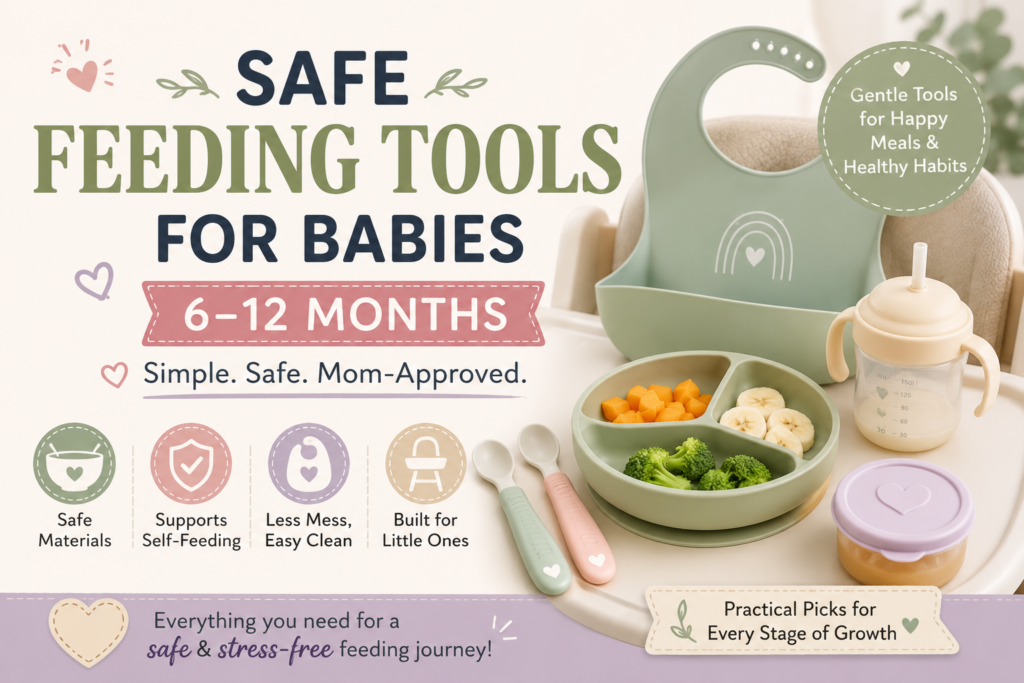
Starting solids is an exciting milestone for both babies and parents. Between 6–12 months, babies slowly begin exploring new textures, tastes, and self-feeding skills. During this stage, choosing the right safe feeding tools for babies can make mealtime easier, cleaner, and more comfortable.
Many first-time moms feel overwhelmed by the number of feeding products available online. But the truth is — your baby only needs a few simple and safe feeding essentials during this stage.
In this gentle guide, we’ll cover the best feeding tools for babies 6–12 months, what to avoid, and how to create a calm and safe feeding routine.
Table of Contents
💛 Why Safe Feeding Tools Matter
As babies begin solids, they are still learning how to chew, swallow, and hold food safely. Using proper feeding tools helps reduce mess, supports independence, and makes feeding safer.
The right feeding setup can also help:
- Encourage self-feeding skills
- Reduce choking risks
- Make cleanup easier
- Support healthy eating habits
- Create a calmer feeding routine
Simple feeding tools are often more helpful than expensive baby gadgets.
🍼 Best Safe Feeding Tools for Babies 6–12 Months
Here are the most practical and beginner-friendly feeding essentials for this stage.
1. Soft Silicone Baby Spoons
Soft silicone spoons are gentle on sensitive baby gums and early teeth.
Look for:
✔ BPA-free material
✔ Soft rounded edges
✔ Lightweight handle
These spoons work well for purees, mashed foods, and first self-feeding attempts.
2. Suction Bowls and Plates
Suction bowls help prevent spills and flying bowls during mealtime.
Babies between 6–12 months love grabbing and exploring food, so suction-based feeding bowls make feeding less stressful for parents.
Choose:
- Non-toxic silicone
- Strong suction base
- Easy-to-clean design
3. Silicone Bibs with Food Catcher
Feeding can get messy quickly during the baby-led weaning stage.
A soft silicone bib with a food-catching pocket helps:
✔ Reduce mess
✔ Keep clothes cleaner
✔ Save cleanup time
They’re also reusable and easy to wash.
4. Sippy Cups or Straw Cups
Around 6 months and beyond, babies can slowly begin practicing water sipping skills.
A beginner-friendly straw cup or spill-resistant sippy cup can help support oral development and hydration habits.
Start slowly and offer small amounts of water during meals.
5. High Chair with Safety Support
A safe feeding chair is one of the most important feeding tools for babies.
Your baby should always sit upright during meals.
Look for:
✔ Safety straps
✔ Easy-to-clean surface
✔ Stable base
✔ Proper back support
Avoid feeding babies while lying down.
6. Divided Plates for Toddlers
As babies grow closer to 9–12 months, divided plates can help separate foods and encourage self-feal exploration.
Many babies enjoy seeing foods separately instead of mixed together.
7. Baby Food Storage Containers
Storage containers help busy moms prepare baby meals in advance.
Useful for:
- Purees
- Soft fruits
- Mashed vegetables
- Homemade baby food
Glass or BPA-free containers are usually safest.
🌿 Feeding Tools You Can Skip
Not every baby feeding product is necessary.
Some products are more trendy than useful.
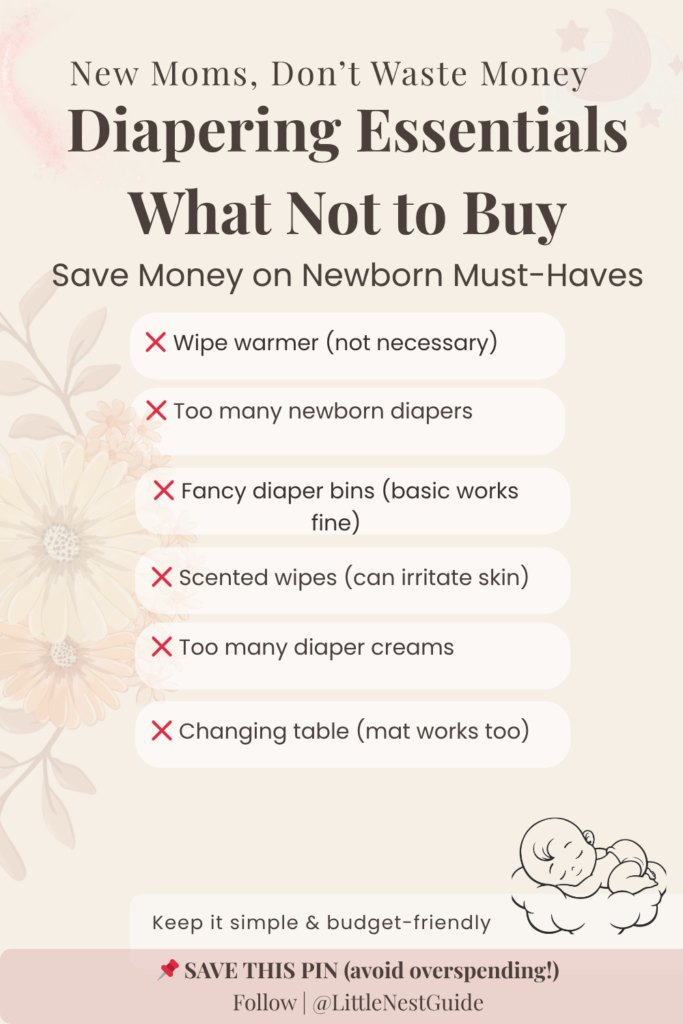
You can skip:
- Fancy food processors
- Large feeding sets
- Too many bottle types
- Complicated warming gadgets
- Expensive baby cutlery sets
Keeping your feeding setup simple often works best.
👶 Signs Your Baby Is Ready for Self-Feeding
Every baby develops differently, but common signs include:
✔ Reaching for food
✔ Holding spoons
✔ Sitting with support
✔ Bringing objects to mouth
✔ Showing interest during family meals
Allow babies to explore food gently without pressure.
💡 Tips for Safe Baby Feeding
These simple habits can make feeding safer and calmer.
Always Supervise Meals
Never leave babies alone while eating.
Introduce One New Food at a Time
This helps identify allergies or food sensitivities more easily.
Avoid Hard or Round Foods
Whole grapes, nuts, popcorn, and hard chunks may increase choking risks.
Let Baby Explore Slowly
Messy feeding is part of learning.
Keep Feeding Calm and Gentle
Avoid forcing babies to finish meals.
A relaxed feeding environment supports healthy eating habits later.
❌ Common Feeding Mistakes New Moms Make
Many parents unintentionally make feeding harder during the early months.
Buying Too Many Feeding Products
Babies usually need fewer tools than expected.
Starting with Complicated Gadgets
Simple feeding tools often work best.
Expecting Clean Mealtimes
Mess is normal during learning.
Forcing Self-Feeding Too Early
Some babies need more time to feel comfortable.
🔗 Related Reads
👉 Newborn Feeding Essentials Checklist
👉 Best Anti-Colic Bottles for Gas Relief
👉 Minimal Baby Shopping List (0–3 Months)
👉 Baby Products You Don’t Need
❓ Frequently Asked Questions (FAQ)
1. What are the safest feeding tools for babies?
Soft silicone spoons, suction bowls, silicone bibs, straw cups, and supportive high chairs are considered some of the safest feeding tools for babies.
2. When can babies start using spoons?
Most babies can begin exploring spoons around 6 months with supervision.
3. Are silicone feeding tools safe for babies?
Yes, food-grade BPA-free silicone feeding tools are generally safe and gentle for babies.
4. Do babies really need suction bowls?
Suction bowls are helpful because they reduce spills and make feeding less stressful during self-feeding stages.
5. What feeding tools should I avoid buying?
Avoid overbuying expensive feeding gadgets, large feeding sets, or unnecessary tools that may not be useful long-term.
❤️ Final Thoughts
Choosing safe feeding tools for babies 6–12 months doesn’t have to feel overwhelming.
Simple, practical, and gentle feeding essentials are often all your baby truly needs during this learning stage.
Focus on comfort, safety, and calm routines rather than buying every trending baby product.
With patience and simple feeding tools, mealtime can become a beautiful bonding experience for both you and your baby.
Explore More Like This
- 20 Easy Baby Breakfast Ideas for 6–12 Months
- 200+ Vintage Baby Girl Names With Beautiful Meanings

- 30 Kids Party Food Ideas Everyone Will Love
- 100+ Vintage Baby Boy Names With Cool Meanings

- Storage Tips for Homemade Baby Food: A Safe & Easy Guide for Parents
- 100+ Cultural & Modern Dhanu Rashi Baby Boy Names With Wonderful Meanings