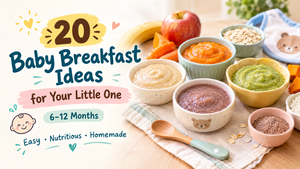
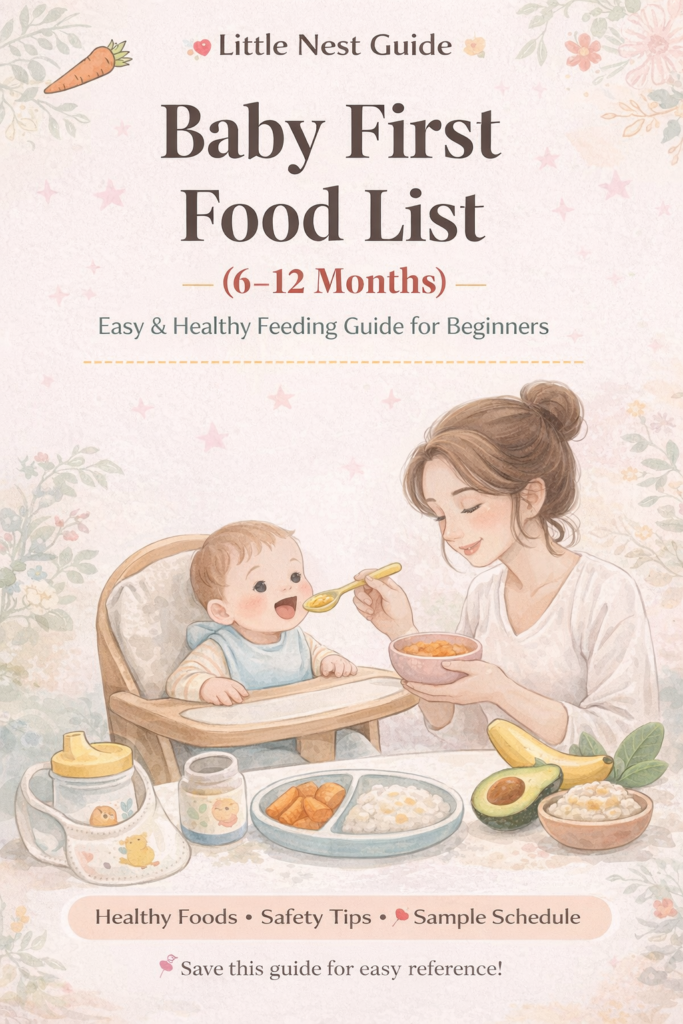
The Baby First Food List helps parents choose safe, healthy, and nutritious meals for babies aged 6–12 months.
Starting solids is one of the most exciting milestones in your baby’s journey. Around 6 months, babies begin exploring new tastes, textures, and nutrients beyond breast milk or formula. But for many parents, one big question remains:
What should I feed my baby first?
Choosing the right foods during the 6–12 month stage is important for healthy growth, brain development, and building good eating habits. Your baby’s first foods should be soft, easy to digest, and packed with nutrients.
This complete Baby First Food List (6–12 months) will help you understand the best vegetables, fruits, grains, and protein-rich foods to safely introduce to your little one.
Whether you’re a first-time mom or simply looking for a simple feeding guide, this blog will make your baby’s food journey easier and stress-free.
👉 Save this guide for your baby’s daily meal planning!
Table of Contents
👶 When Should You Start Solid Foods?
Most babies are ready to begin solids around 6 months of age. Breast milk or formula still remains the main source of nutrition, but solids help babies learn chewing, swallowing, and accepting new flavors.
Signs Your Baby Is Ready for Solids
Look for these signs before starting:
- Can sit with support
- Has good head and neck control
- Shows interest in your food
- Opens mouth when offered food
- Reduced tongue-thrust reflex (doesn’t push food out automatically)
If your baby shows these signs, it may be the right time to begin.
Baby First Food List
🥕 Best Vegetables for Baby’s First Food
Vegetables are rich in vitamins, minerals, and fiber. Start with soft, steamed, and mashed vegetables that are gentle on your baby’s stomach.
Top Vegetable Choices
1. Carrot (Steamed & Mashed)
Carrots are rich in Vitamin A, which supports healthy eyesight and immunity.
2. Sweet Potato
Naturally sweet and easy to digest, sweet potatoes are excellent for energy and weight gain.
3. Pumpkin
Pumpkin is soft, nutritious, and helps with digestion.
4. Peas
Peas provide fiber, vitamins, and a mild flavor babies often enjoy.
5. Spinach
Spinach contains iron and calcium, but should be served well-cooked and blended.
6. Bottle Gourd (Lauki)
Very gentle on digestion and perfect for babies starting solids.
7. Potato
Soft mashed potatoes are filling and easy to prepare.
🍎 Best Fruits for Baby’s First Food
Fruits are naturally sweet and babies usually accept them easily. Always serve fruits mashed, pureed, or steamed if needed.
Top Fruit Choices
1. Banana
Banana is one of the best first foods—soft, naturally sweet, and rich in potassium.
2. Apple (Steamed Puree)
Steamed apple puree is gentle on the stomach and easy to digest.
3. Pear
Pear puree is soft, hydrating, and good for digestion.
4. Avocado
Avocado is full of healthy fats and supports brain development.
5. Papaya
Papaya is soft, nutritious, and helps prevent constipation.
6. Chikoo (Sapota)
A naturally sweet fruit that works well mashed.
7. Mango (Seasonal)
Mango puree can be introduced once your baby adjusts to basic fruits.
🌾 Healthy Grains for Babies
Grains provide energy and help keep your baby full for longer. Start with soft porridge-style grains.
Best Grain Options
1. Rice (Soft or Porridge)
Rice is easy to digest and often the first grain introduced.
2. Oats
Oats are rich in fiber and help digestion.
3. Ragi (Finger Millet)
Ragi is rich in calcium and iron—excellent for growing babies.
4. Suji (Semolina)
Suji porridge is smooth, filling, and easy to prepare.
5. Dalia (Broken Wheat)
Soft cooked dalia makes a healthy meal option.
6. Poha (Flattened Rice)
Soft cooked poha can be introduced later around 8+ months.
🥚 Protein-Rich Foods for Babies
Protein supports growth, muscle development, and overall health.
Safe Protein Options
1. Moong Dal
Light and easy to digest, moong dal is ideal as a first lentil.
2. Lentils
Cooked and mashed lentils provide protein and iron.
3. Curd (Yogurt)
Homemade curd is excellent for digestion and gut health.
4. Egg Yolk
Egg yolk can be introduced after 8 months if recommended by your pediatrician.
5. Paneer
Soft mashed paneer provides calcium and protein.
6. Tofu
A good vegetarian protein option for babies.
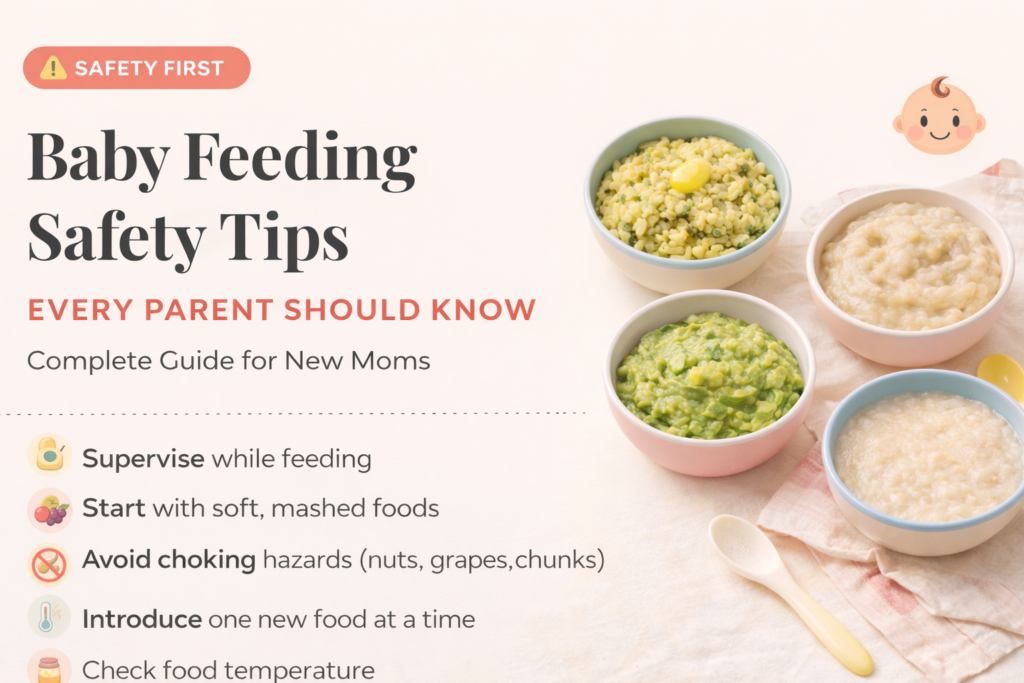
⚠️ Baby Feeding Safety Tips
Safety is just as important as nutrition when introducing solids.
Follow These Essential Tips
Start with One Food Every 2–3 Days
This helps you identify allergies or digestive issues easily.
Watch for Allergies
Common signs include:
- Rashes
- Vomiting
- Loose motions
- Swelling
- Breathing difficulty
If symptoms appear, consult your doctor immediately.
Keep Texture Soft & Smooth
Avoid hard chunks that may cause choking.
Avoid Honey Before 1 Year
Honey can cause infant botulism and should never be given before age one.
Avoid Salt and Sugar
Babies do not need added salt or sugar in the first year.
Feed in Upright Position
Always keep your baby seated upright during meals.
Never Force Feed
Follow your baby’s hunger and fullness cues.
🍽️ Sample Baby Meal Plan (6–12 Months)
Here’s a simple example of a daily meal routine:
Morning
Breast milk or formula
Breakfast
Ragi porridge or banana mash
Mid-Morning
Steamed apple puree
Lunch
Moong dal khichdi with vegetables
Evening Snack
Curd or mashed sweet potato
Dinner
Soft rice with dal or vegetable khichdi
Before Bed
Breast milk or formula
❌ Foods to Avoid During the First Year
Some foods should be avoided completely for safety reasons.
Avoid These Foods
- Honey
- Whole nuts
- Whole grapes
- Popcorn
- Chips and packaged snacks
- Added sugar
- Excess salt
- Cow’s milk as main drink before 1 year
- Spicy or oily foods
These foods may increase choking risk or be difficult for digestion.
❓ FAQ Section
1. What is the best first food for a baby?
The best first foods for babies are soft, easy-to-digest options like banana mash, steamed apple puree, rice porridge, moong dal, and mashed sweet potato. These foods are gentle on the stomach and rich in nutrients.
2. At what age should I start solid foods for my baby?
Most babies are ready to start solid foods around 6 months of age when they can sit with support, have good head control, and show interest in food.
3. Can I give fruits as first food to my baby?
Yes, fruits like banana, apple puree, pear, avocado, and papaya are excellent first foods for babies. Always serve them mashed or pureed for easy swallowing.
4. Which vegetables are safe for baby’s first food?
Steamed and mashed vegetables like carrot, sweet potato, pumpkin, peas, and spinach are safe and healthy first food options for babies.
5. Can I give rice as my baby’s first food?
Yes, soft rice porridge or rice cereal is one of the most common first foods for babies because it is easy to digest and gentle on the tummy.
6. Why should honey be avoided before 1 year?
Honey should be avoided before 1 year because it can cause infant botulism, a serious illness that can be dangerous for babies.
7. How often should I introduce new foods to my baby?
It is best to introduce one new food every 2–3 days. This helps parents watch for allergies or digestive issues before trying another food.
8. Should I add salt or sugar to baby food?
No, babies under 1 year do not need added salt or sugar. Natural flavors are enough and healthier for their growth and development.
9. What foods should babies avoid in the first year?
Babies should avoid honey, whole nuts, whole grapes, popcorn, packaged snacks, added sugar, excess salt, and spicy or oily foods.
10. How do I know if my baby is ready for solids?
Signs include sitting with support, good head control, interest in food, opening the mouth when offered food, and reduced tongue-thrust reflex.
💛 Final Thoughts
Your baby’s first food journey doesn’t need to be complicated. Simple homemade meals are often the healthiest and safest choice.
Focus on fresh ingredients, soft textures, and gradual introduction of foods. Every baby grows differently, so be patient and trust the process.
This Baby First Food List (6–12 months) is your simple roadmap to building healthy eating habits from the very beginning.
If you’re looking for the best first foods for babies, this simple guide makes feeding easier for new moms.
Remember—feeding is not just about nutrition, it’s also about comfort, learning, and love.
👉 Save this guide for your baby’s first food journey!
🔗 Internal Linking Ideas
- Baby Feeding Safety Tips Every Parent Should Know
- Baby Weight Gain Meal Plan (6–12 Months)
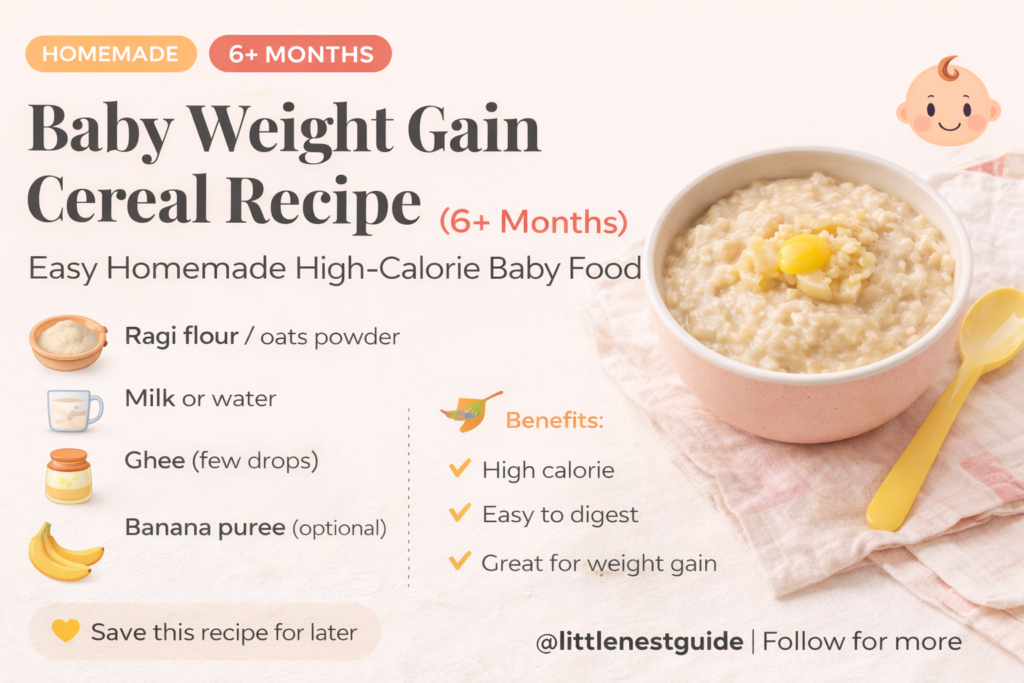
- Homemade Baby Cereal Recipe for Weight Gain
- Newborn Feeding Essentials Checklist
Loved this guide? Save this pin on Pinterest so you can come back anytime for your baby’s meal planning