If your baby is crying, fussy, and refusing to sleep—you might think they’re not tired enough.
But the truth is often the opposite.
👉 Your baby may be overtired.
An overtired baby finds it harder to fall asleep and stay asleep, which leads to more crying and frustration for both baby and parents.
In this guide, you’ll learn how to identify overtired signs early and help your baby sleep better.
😴 What Does “Overtired” Mean?
Overtired means your baby has stayed awake longer than their body can handle.
👉 When this happens:
- Stress hormones increase
- Baby becomes fussy and restless
- Falling asleep becomes difficult
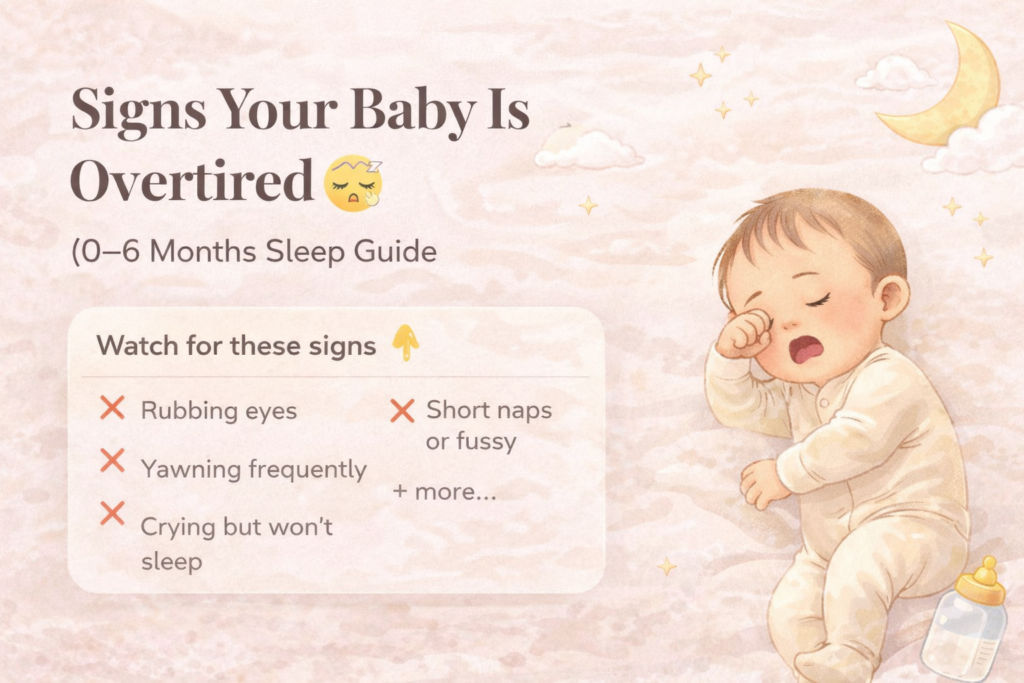
🚫 7 Signs Your Baby Is Overtired
1. Rubbing Eyes or Face
One of the earliest sleep cues.
👉 Baby may:
- Rub eyes
- Touch ears or face
✅ What it means:
Your baby is ready for sleep—don’t delay.
2. Frequent Yawning
Yawning is a clear signal of tiredness.
👉 If you miss this stage:
- Baby quickly becomes overtired
3. Crying but Refusing to Sleep
This confuses many parents.
👉 Baby is tired but:
- Can’t settle
- Cries more when you try to put them down
4. Arching Back or Stiff Body
A strong sign of discomfort and overtiredness.
👉 Baby may:
- Arch back
- Push away
5. Short Naps (20–30 Minutes)
Overtired babies often:
- Wake up too soon
- Struggle to connect sleep cycles
6. Hyperactive or Extra Fussy
Surprisingly, overtired babies may:
- Seem energetic
- Move a lot
- Become cranky
👉 This is due to stress hormones.
7. Waking Frequently at Night
Overtiredness doesn’t just affect naps.
👉 It can lead to:
- Frequent night waking
- Difficulty settling back to sleep
⚠️ Why Overtiredness Makes Sleep Worse
When babies stay awake too long:
- Their body releases cortisol (stress hormone)
- They become alert instead of sleepy
👉 Result:
- Harder bedtime
- More crying
- Poor sleep quality
🌙 How to Prevent Overtiredness
✔ Follow Wake Windows
Approximate wake times:
- 0–1 month: 30–60 minutes
- 1–2 months: 60–90 minutes
- 2–3 months: 60–120 minutes
👉 Adjust based on your baby.
✔ Watch Early Sleep Cues
Don’t wait for crying.
👉 Act when you see:
- Yawning
- Quiet staring
- Slower movements
✔ Create a Simple Sleep Routine
Even for newborns:
- Feed
- Dim lights
- Gentle rocking
👉 This signals sleep time.
✔ Keep Environment Calm
- Reduce noise
- Lower lights
- Avoid overstimulation
🔗 Related Reads (Important for Parents)
👉 Newborn Sleep Mistakes to Avoid (0–3 Months)
👉 Why Your Baby Won’t Stop Crying (11 Reasons)
👉 These will help you understand the full sleep cycle.
💛 Final Thoughts
An overtired baby doesn’t sleep better—they struggle more.
Once you learn to spot early signs, sleep becomes easier, calmer, and more predictable.
Remember:
👉 Timing is everything when it comes to baby sleep
📌 Save This Guide
Save this for later so you can quickly recognize overtired signs and help your baby sleep better 💛
Explore More
Looking for more baby name ideas and parenting tips?
Check out:
- Baby Essentials Checklist
- Unique Baby Girl & Boy Names
- Newborn Care Tips
- Postpartum Recovery Guides
- Healthy Racipes for mom
- Baby Feeding Guide
Latest Post –
- 100+ Rare & Unique Cancer Baby Girl Names (With Meanings)

- Signs You’re Healing Well After Delivery (Normal vs Not) – Complete Guide for New Moms

- Diapering Essentials Checklist for New Moms (Complete Newborn Guide)

- Diapering Essentials: What NOT to Buy for Your Newborn (Save Money Guide)

- Best Baby First Food List (6–12 Months) | Healthy & Easy Baby Food Guide