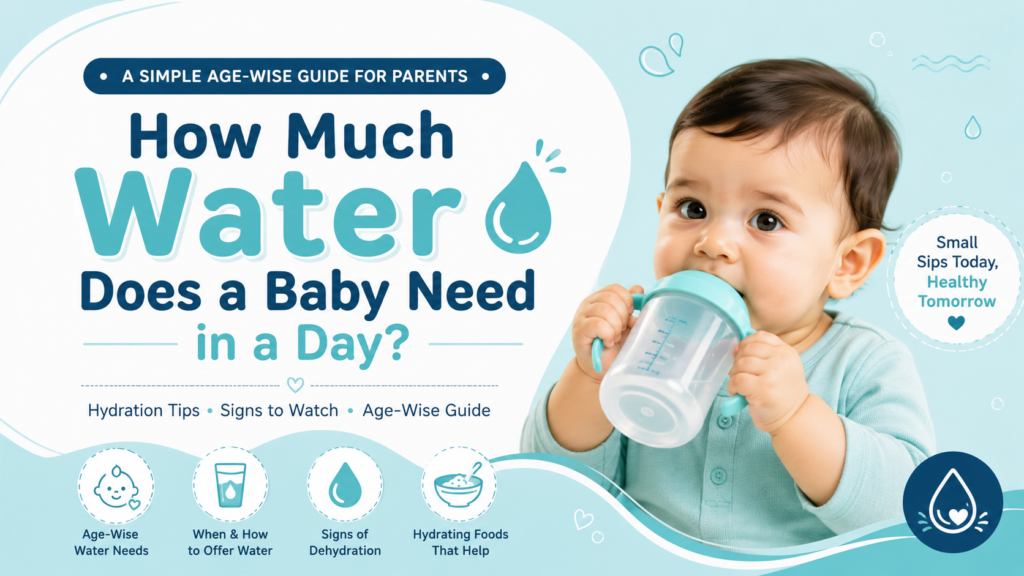
One of the most common questions new parents ask after starting solids is:
“How Much Water A Baby Needs In A Day?”
It sounds like a simple question, but the answer depends a lot on your baby’s age, feeding stage, weather, diet, and overall health. Too little water can lead to constipation or dehydration, while too much water—especially in younger babies—can interfere with nutrition and even be unsafe.
If you’ve recently started solids and you’re wondering whether your baby needs a few sips, half a cup, or more, this guide will help you understand it clearly.
In this article, we’ll cover:
- How much water babies need by age
- When babies can start drinking water
- Signs your baby may need more fluids
- How to safely offer water to babies
- Common mistakes parents make with baby hydration
- Tips for keeping babies hydrated in hot weather
Let’s make baby hydration simple and stress-free.
As your baby grows, hydration and portion sizes go hand in hand. If you’re also wondering how much food your little one should eat at different stages, this baby portion size by age guide can help you build a more balanced feeding routine.
Table of Contents
Why Water Needs Change as Babies Grow
Babies don’t need water in the same way adults do. In the early months, breast milk or formula provides almost all the hydration a baby needs. As babies begin solids and start eating thicker foods like cereals, mashed fruits, dal, khichdi, or porridge, their need for extra water gradually increases.
A baby’s daily fluid intake can come from:
- Breast milk
- Formula milk
- Water
- Watery foods like fruits, soups, porridge, or curd-based meals
That’s why the answer to “how much water does a baby need?” is never one fixed number for every baby.
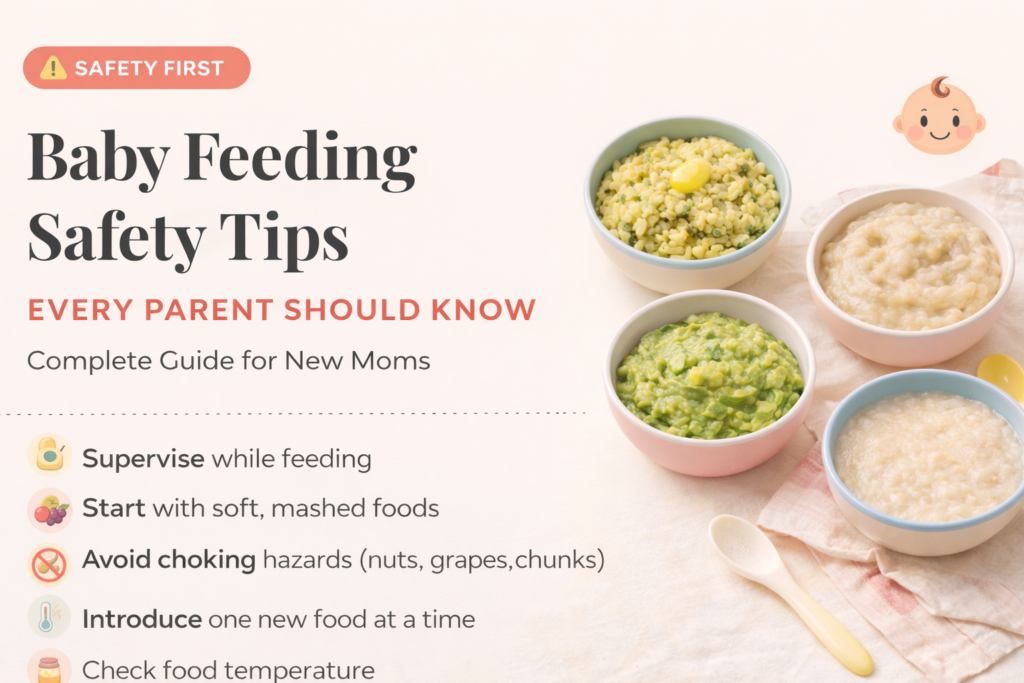
Offering water safely is just one part of baby feeding. If you’re starting solids or introducing new foods, these baby feeding safety tips can help you avoid common mistakes and feed with more confidence.
Can Babies Drink Water Before 6 Months?
In most cases, babies under 6 months do not need extra water.
If your baby is exclusively breastfed or formula-fed, their milk already gives them the hydration they need—even in warm weather. Giving extra water too early can fill their tiny tummy, reduce milk intake, and in some cases dilute important nutrients.
Why too much water before 6 months is not recommended:
- It can reduce hunger for breast milk or formula
- It may affect sodium balance in the body
- It can interfere with overall nutrition
- Very young babies have immature kidneys
Important note:
There can be exceptions if a pediatrician specifically recommends water in special situations, but in general, babies under 6 months should not be given regular drinking water.
How Much Water Does a Baby Need by Age?
Let’s break it down in a simple age-wise way.
6–8 Months: Just Small Sips of Water
Once your baby starts solids, you can begin offering small sips of water.
At this age, water is not meant to replace milk. It’s simply introduced as part of mealtime habits and to support digestion as solids begin.
How much water for 6–8 months?
A baby in this stage usually needs around:
2–4 ounces (60–120 ml) of water per day at most
This is often spread across the day as just a few sips after meals or between feeds.
Best way to offer water at this stage:
- Offer 2–3 small sips after solids
- Use an open cup, spoon, or tiny sipper
- Don’t force water if baby refuses
- Keep breast milk or formula as the main source of hydration
Example:
If your baby eats banana mash in the morning and rice cereal in the evening, you can offer a few sips of water after each meal.
9–12 Months: Water Intake Slowly Increases
By 9 months, many babies are eating 2–3 meals a day, trying thicker textures, and becoming more active. This is when water can become a more regular part of the routine.
How much water for 9–12 months?
Most babies in this age group can have around:
4–8 ounces (120–240 ml) of water per day
This amount does not need to be given all at once. It can be offered gradually in small amounts during and after meals.
When water is especially helpful:
- If baby eats dry or thick foods like oats, khichdi, suji, cereal, or toast
- If baby has mild constipation
- If the weather is hot
- If baby is very active or crawling a lot
Keep in mind:
Even at this stage, breast milk or formula is still a major source of fluids and nutrition.
12–24 Months: Water Becomes More Important
After the first birthday, babies gradually move toward a more balanced diet of solids, snacks, milk, and water. Since they’re eating more table foods and becoming more physically active, daily water intake becomes more important.
How much water for 12–24 months?
Toddlers in this age range generally need about:
1–4 cups of water per day (240–960 ml)
The exact amount depends on:
- weather
- activity level
- how much milk they drink
- the water content of their meals
- whether they’re unwell or teething
A good starting point for many toddlers is around 2–3 cups a day, then adjusting based on appetite, heat, and activity.
If your baby has recently started solids, pairing simple meals with small sips of water can make feeding easier. Explore these easy homemade baby food recipes for beginners for gentle first-food ideas.
Simple Baby Water Intake Chart by Age
0–6 Months
- Extra water: Not usually needed
- Main hydration: Breast milk or formula only
6–8 Months
- Water: 2–4 oz / 60–120 ml daily
- How: Small sips with solids
9–12 Months
- Water: 4–8 oz / 120–240 ml daily
- How: With meals + small sips through the day
12–24 Months
- Water: 1–4 cups / 240–960 ml daily
- How: Meals, snacks, playtime, and hot weather
Does Breastfed Baby Need Water After Starting Solids?
Yes—but only in small amounts once solids begin.
A breastfed baby who has started solids can have a few sips of water after meals. However, breast milk still remains a major source of hydration during the first year.
If your baby is eating only a small amount of solids, they may not need much extra water at all. If they are eating more cereals, porridges, fruits, and family foods, a little water becomes more useful.
Does Formula-Fed Baby Need Water?
The answer is similar: yes, after solids begin—but only in age-appropriate amounts.
Formula already provides hydration before 6 months. After solids start, small amounts of water can be introduced with meals.
Signs Your Baby May Need More Water
It’s not about making babies drink large amounts—it’s about noticing when they may need a little more hydration.
Here are some signs that your baby may need more fluids:
1. Dry lips or dry mouth
If your baby’s lips seem dry often, it may be a sign they need more fluids.
2. Hard stools or constipation
When babies begin solids, constipation can happen. Offering small amounts of water along with fiber-rich foods may help.
3. Dark yellow urine
Very concentrated urine can suggest low fluid intake.
4. Fewer wet diapers than usual
Wet diapers are one clue to hydration, especially in younger babies.
5. Baby seems unusually fussy in hot weather
Heat can increase fluid needs.
6. Baby is eating more solids and less milk
As solids increase, water usually becomes more important too.
Signs of Dehydration in Babies
Mild thirst is one thing—but dehydration needs attention.
Watch for signs like:
- very few wet diapers
- no tears when crying
- sunken eyes
- dry mouth
- unusual sleepiness
- baby seems weak or very irritable
- high fever with low fluid intake
If you suspect dehydration, especially in a very young baby, it’s best to speak to your pediatrician promptly.
Best Time to Offer Water to Babies
Water is easiest to introduce when it becomes part of a simple routine.
Good times to offer water:
- After meals
- During snack time
- After outdoor play (for toddlers)
- In hot weather
- If baby is eating thick or dry solids
- With fiber-rich foods if stools are hard
Times to avoid large amounts:
- Right before milk feeds
- Right before bedtime if it disturbs sleep
- Instead of milk in babies under 1 year
How to Offer Water to Babies
The goal is to keep it simple and safe.
1. Start with small sips
You don’t need to make your baby “finish” a set amount. Start with a few sips and build the habit naturally.
2. Use an open cup or small baby cup
This can help your baby practice drinking skills while learning self-feeding.
3. Offer at mealtimes
Mealtime is the easiest time to build the water habit.
4. Keep it plain
Babies do not need juice, sweetened drinks, flavored water, or sugary beverages.
5. Don’t force
Some babies take time to accept water. Offer regularly without pressure.
Can Too Much Water Be Harmful for Babies?
Yes—especially for younger babies.
Water is important, but overdoing it can become a problem if it starts replacing milk or if large amounts are offered too early.
Too much water can:
- reduce appetite for milk or meals
- make baby feel full too quickly
- interfere with overall calorie intake
- be unsafe in very young infants
That’s why it’s best to think of water as supportive hydration, not something babies need in large quantities.
Water and Constipation in Babies
One reason parents start thinking about water is constipation.
As babies move from milk to solids, their poop may change in texture and frequency. If stools become hard, dry, or difficult to pass, water may help—especially when combined with high-fiber foods.
Helpful foods along with water:
- pear puree
- prunes
- papaya
- oats
- vegetables
- soaked chia or flax only if age-appropriate and already introduced carefully
Water alone may not solve constipation if the overall diet is low in fiber or the baby is not eating enough fruits and vegetables.
Does Weather Affect How Much Water a Baby Needs?
Yes, absolutely.
In hot weather, babies and toddlers may need a little more water than usual—especially if they are:
- sweating
- playing outdoors
- eating more solids
- recovering from illness
- living in very warm climates
If you live in a hot place, offering small, frequent sips through the day can help.
Water-Rich Foods That Support Baby Hydration
Water doesn’t only come from a cup. Many foods also support hydration.
Hydrating foods for babies and toddlers:
- watermelon (age-appropriate and safely served)
- cucumber
- oranges
- muskmelon
- curd
- soups
- vegetable broths
- thin porridge
- fruit purees
- dal with a thinner consistency
These foods can be especially helpful for babies who don’t love drinking water yet.
Common Baby Water Mistakes Parents Make
Here are some common hydration mistakes to avoid:
1. Giving water before 6 months without medical advice
Young babies usually don’t need it.
2. Replacing milk with water
Milk remains essential during the first year.
3. Forcing baby to drink too much
Hydration should be gradual and natural.
4. Offering juice instead of water
Juice isn’t necessary for babies and toddlers.
5. Waiting until baby is clearly dehydrated
It’s better to build regular hydration habits earlier.
6. Forgetting water when solids increase
As meals become thicker and more frequent, water usually needs to increase too.
Sample Water Routine by Age
Here’s a simple example to make it practical.
6–8 months
- 2–3 sips after lunch
- 2–3 sips after dinner
9–12 months
- a few sips after breakfast
- a few sips after lunch
- a few sips after dinner
- extra sip or two in hot weather
12–24 months
- water with breakfast
- water during snack
- water with lunch
- water after play
- water with dinner
No need to measure every sip perfectly—just use it as a flexible routine.
How to Know If Your Baby Is Drinking Enough Water
You usually don’t need to track every milliliter. Instead, look at the full picture:
- baby seems active and comfortable
- urine is pale yellow
- stools are not consistently hard
- baby is eating and drinking normally
- lips and mouth don’t seem constantly dry
- wet diapers are normal for age
If these things look fine, your baby is probably doing okay.
Final Thoughts: how much water a baby needs in a day
When it comes to how much water a baby needs in a day, the most important thing to remember is this:
Water needs change with age, solids, weather, and activity.
For babies under 6 months, milk is usually enough.
For babies 6–12 months, start with small sips as solids begin.
For toddlers, water gradually becomes a bigger part of the daily routine.
You do not need to chase a perfect number every day. Instead:
- offer water regularly
- keep milk feeds appropriate for age
- notice hydration signs
- adjust during hot weather or constipation
- keep it simple and pressure-free
A few small habits can go a long way in helping your baby stay comfortable, hydrated, and happy as they grow.
FAQs
1. How much water should a 6 month old baby drink?
Once solids begin, a 6 month old can usually have a few small sips of water with meals, roughly around 2–4 oz (60–120 ml) a day at most.
2. Can I give water to my baby before 6 months?
In most cases, no. Babies under 6 months usually get all the hydration they need from breast milk or formula unless a doctor advises otherwise.
3. How much water should a 1 year old drink?
A 1 year old may need around 1–4 cups of water a day depending on weather, diet, activity, and milk intake.
4. Does breast milk count as hydration?
Yes. Breast milk and formula are the main sources of hydration during the first year.
5. What are signs of dehydration in babies?
Dry mouth, fewer wet diapers, no tears while crying, dark urine, unusual sleepiness, or sunken eyes can be warning signs of dehydration.
6. Should I give water after every baby meal?
You can offer a few sips after meals once solids begin, but babies do not need to finish large amounts.
7. Can too much water be harmful for babies?
Yes, especially in younger babies. Too much water can reduce milk intake and may not be safe before 6 months.
8. What helps if my baby has constipation after starting solids?
Offering age-appropriate water along with fiber-rich foods like pear, papaya, oats, and vegetables may help.
You May Also Like
- 20 Easy Baby Breakfast Ideas for 6–12 Months
- 200+ Vintage Baby Girl Names With Beautiful Meanings

- 30 Kids Party Food Ideas Everyone Will Love

- 100+ Vintage Baby Boy Names With Cool Meanings

- Storage Tips for Homemade Baby Food: A Safe & Easy Guide for Parents
- 100+ Cultural & Modern Dhanu Rashi Baby Boy Names With Wonderful Meanings