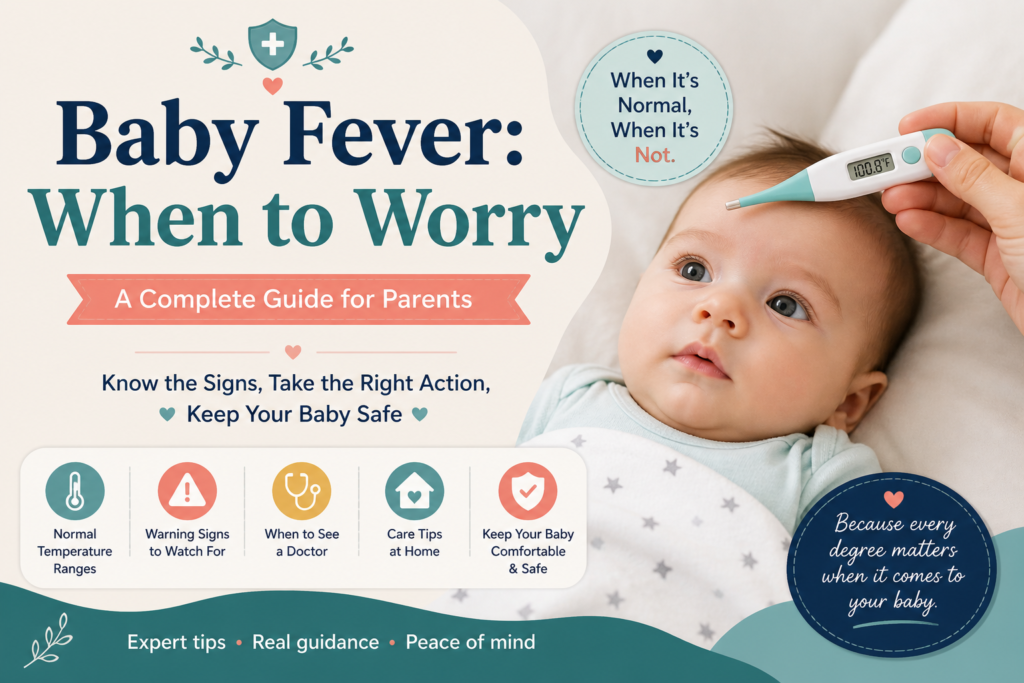
Fever in babies can be scary—especially for new parents. Even a slight rise in temperature can make you anxious and unsure about what to do next.
But here’s the truth: fever itself is not always dangerous. It’s often the body’s natural way of fighting infection.
The real question is:
👉 Baby fever when to worry?
In this guide, you’ll learn when fever is normal, when to take action, and when to seek medical help immediately.
Table of Contents
🌡️ What Is Considered a Fever in Babies?
A baby is considered to have a fever when:
- Rectal temperature is 100.4°F (38°C) or higher
This is the most accurate method for infants.
Other methods (like forehead or ear thermometers) can vary slightly, so always confirm if unsure.
👶 Common Causes of Fever in Babies
Fever doesn’t always mean something serious. Some common causes include:
- Viral infections (cold, flu)
- Vaccinations (temporary fever)
- Teething (mild temperature rise—not high fever)
- Bacterial infections (less common but serious)
👉 Most fevers are mild and resolve on their own.
⚠️ Baby Fever: When to Worry
This is the most important part 👇
🚨 1. Baby Is Under 3 Months Old
👉 Any fever in a baby under 3 months is serious
Even if your baby seems okay:
- Seek medical help immediately
- Do not wait or self-treat
🚨 2. High Fever (Above 102°F / 38.9°C)
If your baby has a high fever:
- Monitor closely
- Contact a doctor
Very high temperatures can indicate infection.
🚨 3. Fever Lasts More Than 24–48 Hours
If fever continues:
- It may not be a simple viral infection
- Medical evaluation is important
🚨 4. Baby Is Very Lethargic or Unresponsive
Watch for:
- Excessive sleepiness
- Weak cry
- Not reacting normally
👉 This needs immediate attention.
🚨 5. Refusing to Feed
If your baby:
- Is not feeding
- Shows signs of dehydration
👉 This is a red flag.
🚨 6. Difficulty Breathing
Signs include:
- Fast breathing
- Wheezing
- Chest pulling inward
👉 Seek urgent care.
🚨 7. Persistent Crying or Irritability
If your baby:
- Cries continuously
- Cannot be comforted
👉 It may indicate discomfort or illness.
🚨 8. Rash Along With Fever
A rash combined with fever may signal:
- Viral infection
- Allergic reaction
- Serious illness (rare but possible)
🟡 When Fever Is Usually NOT Serious
Fever may be manageable at home if:
- Baby is active and responsive
- Feeding normally
- Sleeping comfortably
- Fever is mild (below 101–102°F)
👉 Always trust your instinct as a parent.
🏠 How to Manage Baby Fever at Home
If your baby is otherwise fine:
✔ Keep Baby Hydrated
- Breastfeed or formula feed frequently
- Offer smaller feeds more often
✔ Dress Comfortably
- Avoid overdressing
- Use light clothing
✔ Maintain a Calm Environment
- Keep room cool and comfortable
- Avoid excessive stimulation
✔ Monitor Temperature Regularly
- Check every few hours
- Track changes
✔ Follow Doctor’s Advice for Medication
- Only give medication if prescribed
- Avoid self-medicating newborns
❌ What NOT to Do
Avoid these common mistakes:
- ❌ Don’t panic immediately
- ❌ Don’t overdress baby
- ❌ Don’t give adult medicines
- ❌ Don’t ignore warning signs
🔗 Related Reads
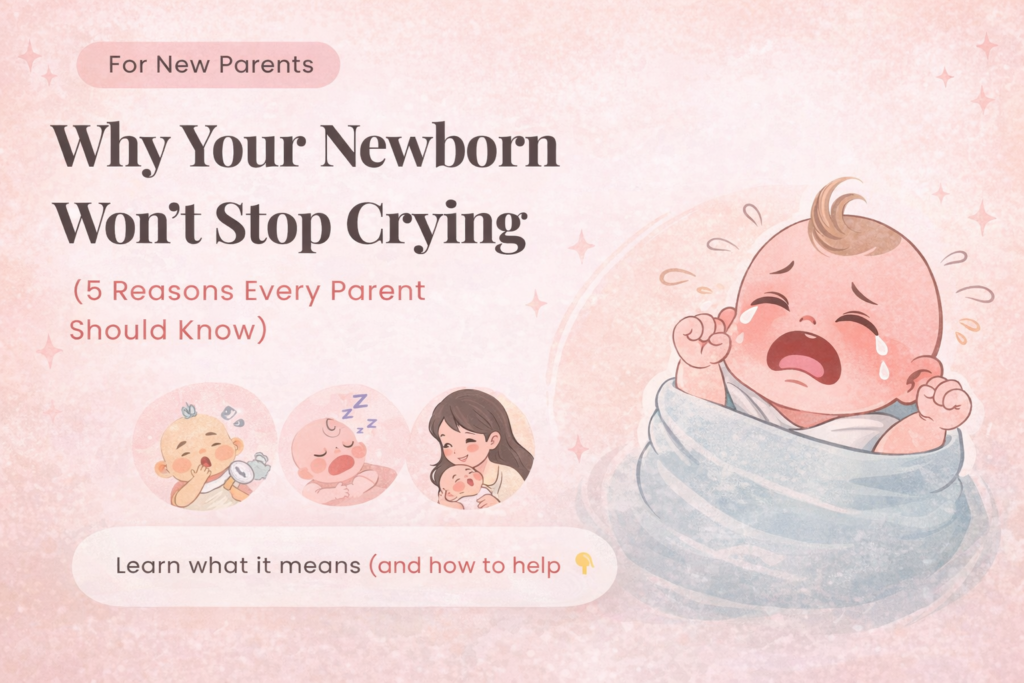
👉 Why Your Baby Won’t Stop Crying
👉 How to Relieve Gas in Babies Fast
👉 Signs Your Baby Is Overtired
These topics help you understand your baby’s overall health better.
💛 Final Thoughts
Fever in babies can feel overwhelming, but knowing when to worry and when to stay calm makes a big difference.
Remember:
👉 Fever is often a sign the body is fighting infection
👉 Watch your baby—not just the number on the thermometer
👉 When in doubt, always consult your doctor
Your instincts matter 💛
❓ FAQs
1. What temperature is too high for a baby?
A temperature above 100.4°F (38°C) is considered a fever.
Above 102°F (38.9°C) requires closer monitoring and medical advice.
2. Should I worry about fever after vaccination?
Mild fever after vaccination is normal and usually resolves within 1–2 days.
3. Can teething cause fever in babies?
Teething may cause a slight increase in temperature but not a high fever.
4. When should I take my baby to the doctor for fever?
- Baby under 3 months with any fever
- Fever lasting more than 24–48 hours
- Baby is lethargic or not feeding
5. Can I give medicine for baby fever?
Only give medication if recommended by a doctor. Avoid self-medication.
Explore More
- 20 Easy Baby Breakfast Ideas for 6–12 Months

- 200+ Vintage Baby Girl Names With Beautiful Meanings

- 30 Kids Party Food Ideas Everyone Will Love

- 100+ Vintage Baby Boy Names With Cool Meanings

- Storage Tips for Homemade Baby Food: A Safe & Easy Guide for Parents

- 100+ Cultural & Modern Dhanu Rashi Baby Boy Names With Wonderful Meanings