One of the biggest questions parents ask after starting solids is:
“How much should my baby actually eat?”
Some babies finish everything. Others eat two spoons and turn away.
And both can be completely normal.
Understanding baby portion size by age helps reduce feeding stress and supports healthy growth without forcing food.
This guide covers:
- Baby portion size by age (6–24 months)
- Sample serving ideas
- Signs baby is hungry or full
- Common feeding mistakes
- Easy tips for stress-free meals
Remember: portion sizes are starting points—not strict rules. Appetite changes daily.
Table of Contents
Why Portion Size Matters
Offering age-appropriate portions helps:
✔ Prevent overfeeding
✔ Reduce food waste
✔ Support self-regulation
✔ Encourage healthy eating habits
✔ Make meal planning easier
Milk (breast milk/formula) still remains important during the first year.
Baby Portion Size by Age
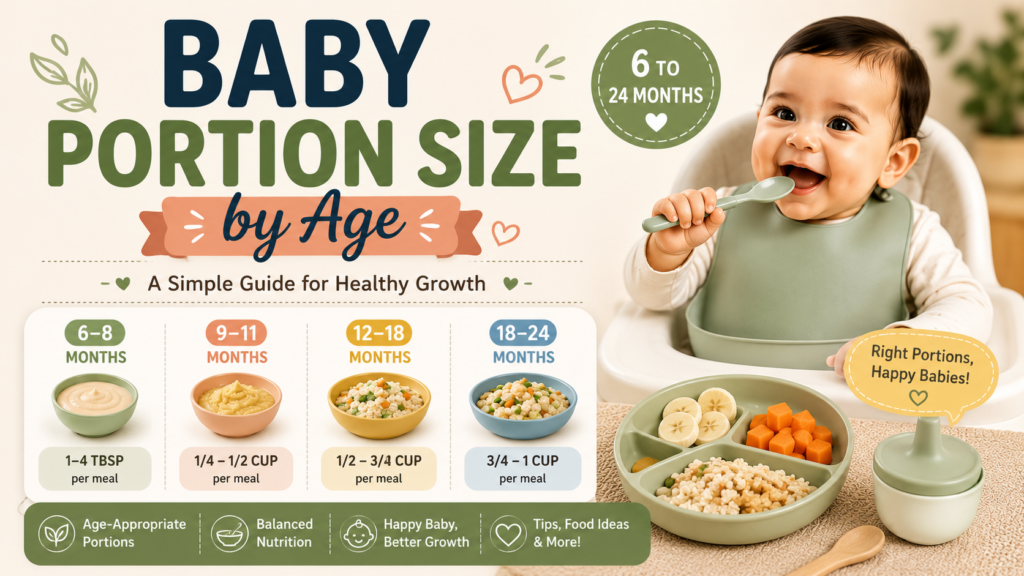
Portion Size for Babies 6–8 Months
At this stage, solids are for learning.
Frequency
1–2 small meals daily
Portion Size
Start with: 1–2 tablespoons per food
Gradually increase to: 2–4 tablespoons
Example Meal
Breakfast: 2 tbsp banana mash
Lunch: 3 tbsp rice cereal
Dinner: 2 tbsp vegetable puree
Good Foods
- Banana
- Apple puree
- Rice cereal
- Oats
- Sweet potato
- Moong dal puree
Starting solids and unsure what to serve? These easy homemade baby food recipes for beginners include simple first foods and baby-friendly meal ideas for everyday feeding.
Portion Size for Babies 9–11 Months
Baby becomes more active and curious.
Frequency
3 meals + 1 snack
Portion Size
- ¼–½ cup per meal
Example Meal
Breakfast: Oats + fruit
Lunch: Dal + rice
Snack: Yogurt
Dinner: Vegetable khichdi
Good Foods
- Soft vegetables
- Fruits
- Lentils
- Eggs
- Paneer
Portion Size for Babies 12–18 Months
Toddlers start eating more independently.
Frequency
3 meals + 2 snacks
Portion Size
- ½–¾ cup each meal
Example Day
Breakfast: Oats porridge
Snack: Banana
Lunch: Rice + dal + vegetables
Snack: Yogurt
Dinner: Khichdi
Portion Size for Toddlers 18–24 Months
Meals begin looking more like family meals.
Frequency
3 meals + 2–3 snacks
Portion Size
¾–1 cup per meal
Example
Breakfast: Egg + toast
Snack: Fruit
Lunch: Rice + curry
Snack: Smoothie
Dinner: Soft family meal
Simple Portion Guide by Food Type
Fruits
2–4 tbsp → ¼ cup → ½ cup
Examples:
- Banana
- Apple
- Pear
- Mango
Vegetables
2 tbsp → ¼ cup → ½ cup
Examples:
- Pumpkin
- Sweet potato
- Carrot
- Boiled potato
Protein Foods
1–3 tbsp → ¼ cup
Examples:
- Dal
- Paneer
- Yogurt
- Egg
Once you understand portion sizes, choosing nutrient-dense foods becomes easier. Explore these 5 homemade protein powder recipes for babies to add simple protein-rich options into your baby’s meals while keeping feeding balanced and age-appropriate.
Grains
2 tbsp → ½ cup
Examples:
- Rice (Rice cereal is one of the easiest foods to serve when introducing solids. Learn how to prepare this healthy homemade rice cereal recipe for babies with simple ingredients.)
- Oats
- Ragi
- Suji
Babies do not need added sugar to enjoy food. Discover these naturally sweet baby food recipes made with fruits and wholesome ingredients for healthy feeding.
Signs Baby Is Hungry
Babies show hunger in simple ways before becoming upset. Your baby may open their mouth, reach for food, watch others eat, or seem excited during mealtime. Learning these cues can make feeding more relaxed and responsive.
Your baby may:
✔ Open mouth
✔ Reach for spoon
✔ Get excited at meals
✔ Look for food
Signs Baby Is Full
Babies are naturally good at regulating how much they need. Turning the head away, closing the mouth, slowing down eating, or playing with food can all be signs your baby is finished.
Your baby may:
✔ Turn head away
✔ Close mouth
✔ Throw food
✔ Slow down eating
Respect fullness cues.
Common Portion Size Mistakes
1. Comparing with Other Babies
Every baby eats differently depending on growth, activity, and appetite. Comparing portion sizes with friends, siblings, or online examples can create unnecessary stress and unrealistic expectations.
2. Forcing Extra Bites
Encouraging one more spoon may seem helpful, but pressure can make mealtimes stressful. Respecting your baby’s fullness cues helps build a healthier relationship with food over time.
3. Expecting Full Meals Immediately
When babies start solids, eating is mostly about learning and exploring. It’s completely normal if your baby only eats a few spoonfuls at first and gradually increases over time.
4. Offering Large Portions
Large portions can feel overwhelming for little eaters and often lead to food waste. Start with small servings and offer more if your baby still seems interested.
5. Ignoring Milk Intake
During the first year, breast milk or formula remains an important source of nutrition. Solids gradually increase, but milk continues to support growth and development.
Easy Feeding Tips
Use Small Bowls
Serving food in small bowls makes portions look more manageable and less overwhelming. It also helps parents focus on realistic expectations instead of finishing large servings.
Follow Baby’s Appetite
Babies do not eat the same amount every day, and that is normal. Growth spurts, activity, sleep, and teething can all affect how much your baby wants to eat.
Focus on Variety
Healthy feeding is not about eating large amounts of one food. Offering a mix of fruits, vegetables, grains, and protein helps expose babies to different tastes and nutrients. Balance matters more than quantity.
Repeat Foods
Babies may need multiple opportunities before accepting a new food. Continue offering familiar foods without pressure—even if your baby refuses initially. Babies may need many exposures.
Keep Meals Relaxed
Mealtimes should feel calm and enjoyable instead of rushed or stressful. A relaxed environment encourages babies to explore food and develop positive eating habits. Less pressure often means better eating.
Sample One-Day Baby Meal Plan (9–12 Months)
Breakfast: Oats + banana
Snack: Fruit puree
Lunch: Khichdi + ghee
Snack: Yogurt
Dinner: Vegetable dal rice
❓ FAQs
How much should a 6 month old eat?
Start with 1–2 tablespoons per food and gradually increase.
Is it normal if my baby eats very little?
Yes, appetite changes daily.
Should babies finish every meal?
No. Babies naturally regulate hunger.
How many meals should a 9 month old have?
Usually 3 meals and 1 snack.
Can I force my baby to eat more?
No, follow hunger and fullness cues.
How do I know if portions are too large?
Frequent leftovers or refusal can indicate large portions.
Final Thoughts
Learning baby portion sizes can make feeding feel easier and more enjoyable.
Start with small servings, observe your baby’s cues, and adjust naturally.
Remember:
💛 Appetite changes
💛 Small portions are normal
💛 Every baby develops differently
Feeding isn’t about perfect numbers—it’s about building healthy habits.
Explore More By Categories
Realted Reads For Mom
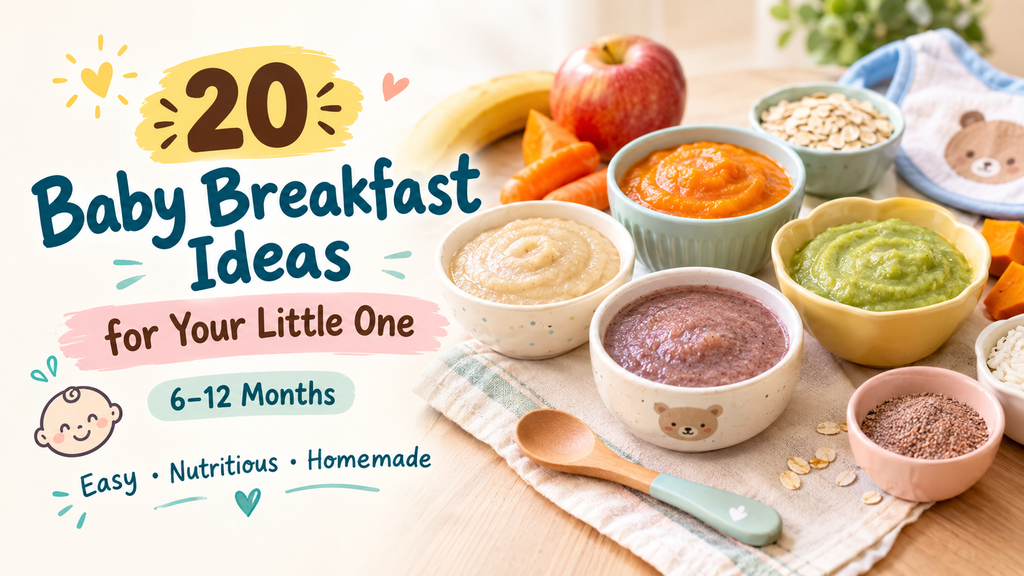
- 20 Easy Baby Breakfast Ideas for 6–12 Months
- 200+ Vintage Baby Girl Names With Beautiful Meanings
- 30 Kids Party Food Ideas Everyone Will Love
- 100+ Vintage Baby Boy Names With Cool Meanings
- Storage Tips for Homemade Baby Food: A Safe & Easy Guide for Parents
- 100+ Cultural & Modern Dhanu Rashi Baby Boy Names With Wonderful Meanings