Starting solids is one of the most exciting milestones in your baby’s journey. But for many parents, especially first-time moms, it can also feel confusing and overwhelming.
Questions like:
- What should I feed first?
- Is homemade baby food safe?
- Which foods are easy to digest?
- How do I prepare baby food at home?
…are completely normal.
The good news? Homemade baby food doesn’t need to be complicated.
With a few simple ingredients and easy recipes, you can prepare healthy, fresh, and nutritious meals right at home. Homemade baby food is budget-friendly, preservative-free, and allows you to control exactly what goes into your baby’s meals.
In this beginner-friendly guide, you’ll learn:
✅ When to start solids
✅ Best first foods for babies
✅ Easy homemade baby food recipes
✅ Feeding safety tips
✅ Foods to avoid
✅ Common beginner mistakes
Let’s make baby feeding simple and stress-free 💛
Table of Contents
👶 When to Start Homemade Baby Food
Most babies are ready to start solids around 6 months of age.
Signs Your Baby Is Ready
Your baby may be ready if they:
- Can sit with support
- Have good head control
- Show interest in food
- Open mouth when food is offered
- Reduced tongue-thrust reflex
Always continue breastfeeding or formula feeding alongside solids.
🌿 Benefits of Homemade Baby Food
Homemade baby food offers many advantages for both babies and parents.
✅ Fresh & Nutritious
You know exactly what ingredients are being used.
✅ No Preservatives
Unlike packaged foods, homemade meals are free from unnecessary additives.
✅ Budget-Friendly
Simple home ingredients cost much less than store-bought baby food.
✅ Better Flavor Exposure
Babies get used to natural flavors early.
✅ Easy to Customize
You can adjust texture and ingredients based on your baby’s needs.
🍌 Best First Foods for Babies
Simple, soft foods are ideal when starting solids.
Beginner-Friendly First Foods
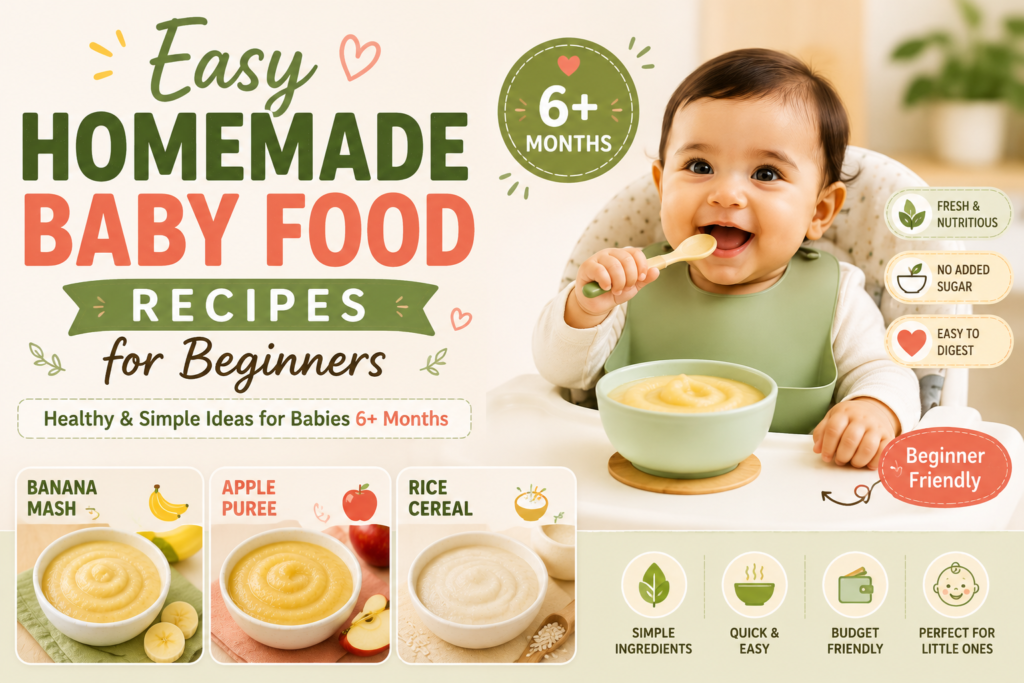
- Banana mash
- Apple puree
- Rice cereal
- Oats porridge
- Sweet potato mash
- Moong dal khichdi
- Ragi porridge
- Avocado mash
Start with single-ingredient foods before combining ingredients.
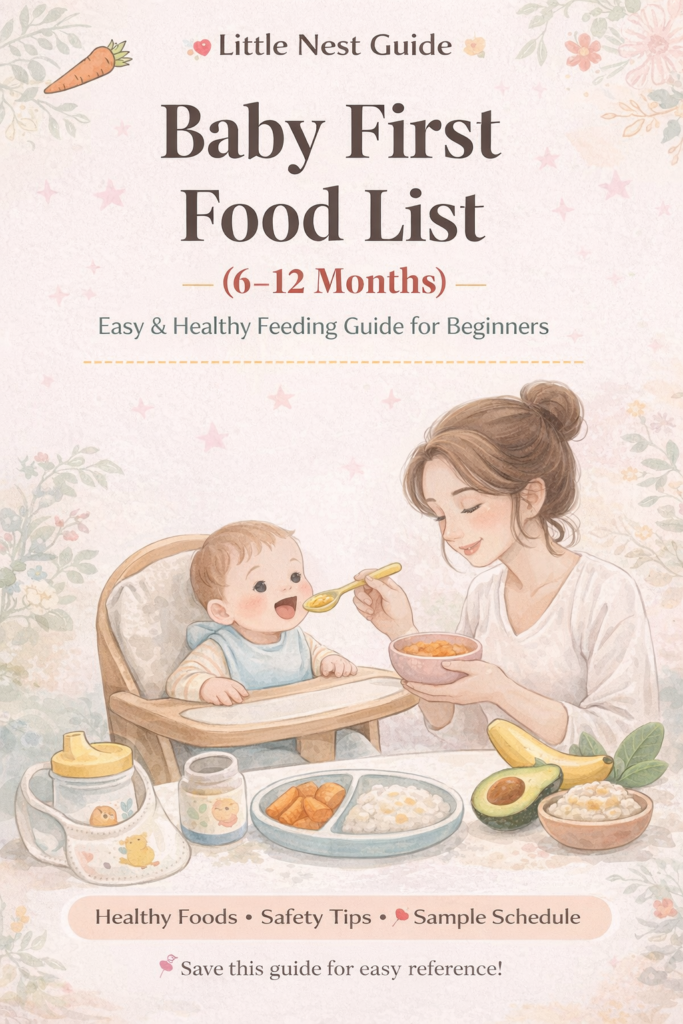
Read Complete Guide Here – Baby First Food List (6–12 Months)
🥣 10 Easy Homemade Baby Food Recipes for Beginners
These recipes are simple, nutritious, and perfect for babies 6+ months.
1. Banana Mash
Ingredients
- 1 ripe banana
Method
Mash banana using a fork until smooth.
Benefits
- Naturally sweet
- Easy to digest
- Great for beginners
2. Apple Puree
Ingredients
- 1 apple
Method
Steam apple pieces until soft and blend.
Benefits
- Gentle on tummy
- Rich in vitamins
Read this for more sweet variation – Naturally Sweet Baby Food Recipes
3. Rice Cereal
Ingredients
- Rice flour
- Water
- Ghee
Method
Cook rice flour with water until smooth. Add a few drops of ghee.
Benefits
- Filling and soft
- Good first food
Read this for more variation – Rice Cereal Recipe for Babies (6+ Months)
4. Oats Porridge
Ingredients
- Oats
- Water or milk
Method
Cook oats until soft and blend if needed.
Benefits
- High in fiber
- Keeps baby full longer
5. Sweet Potato Mash
Ingredients
- Boiled sweet potato
Method
Mash until smooth.
Benefits
- Naturally sweet
- Rich in nutrients
6. Ragi Porridge
Ingredients
- Ragi flour
- Water
- Dates paste
Method
Cook ragi until thick and smooth.
Benefits
- Good for weight gain
- Rich in calcium and iron
7. Moong Dal Khichdi
Ingredients
- Rice
- Moong dal
- Water
Method
Pressure cook until soft and mash well.
Benefits
- Balanced meal
- Easy digestion
8. Avocado Mash
Ingredients
- Ripe avocado
Method
Mash with fork until creamy.
Benefits
- Healthy fats
- Supports brain development
9. Suji Porridge
Ingredients
- Suji (semolina)
- Water or milk
Method
Cook until smooth and soft.
Benefits
- Energy-rich meal
- Easy texture for babies
10. Pear Puree
Ingredients
- Pear
Method
Steam and blend into puree.
Benefits
- Gentle and hydrating
- Mild sweetness babies enjoy
🍽️ Sample Baby Meal Plan for Beginners
Morning
Breast milk or formula
Breakfast
Banana mash
Mid-Morning
Apple puree
Lunch
Moong dal khichdi
Evening Snack
Sweet potato mash
Dinner
Rice cereal or oats porridge
Before Bed
Breast milk or formula
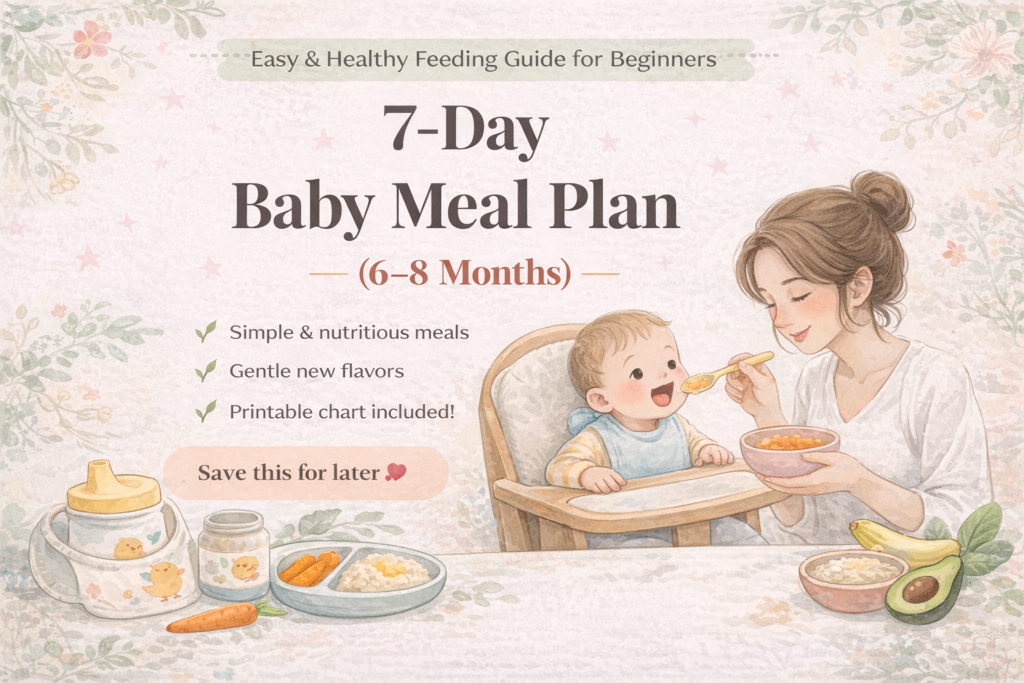
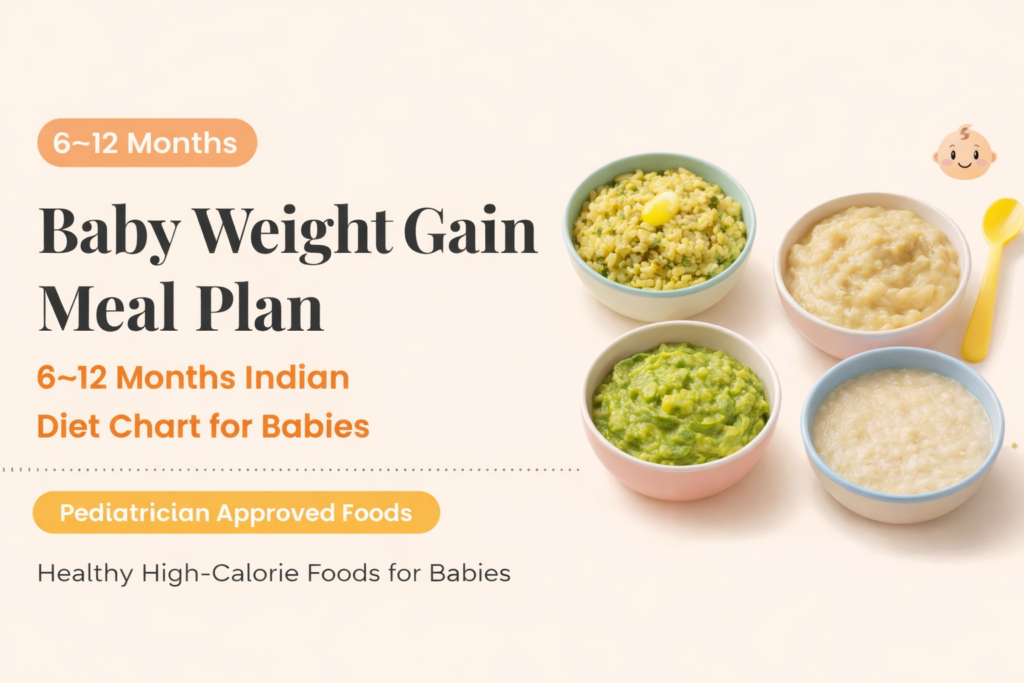
Learn more about baby meal plan – Baby Weight Gain Meal Plan
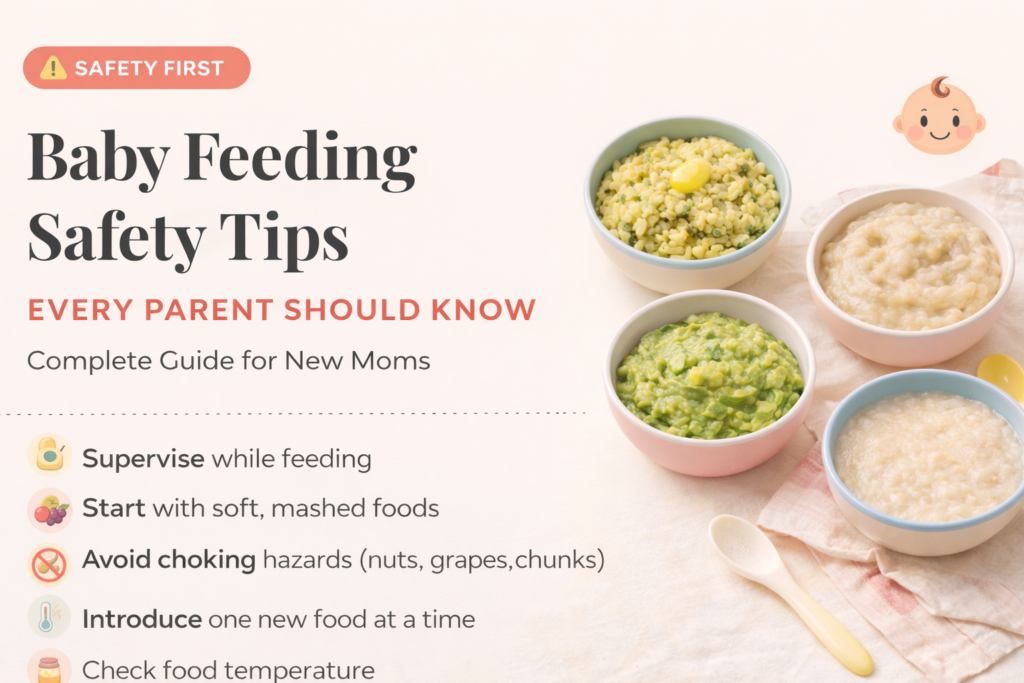
⚠️ Baby Feeding Safety Tips
1. Start Slow
Introduce one new food at a time.
2. Follow the 3-Day Rule
Wait 2–3 days before trying another new food.
3. Keep Texture Soft
Food should be smooth and easy to swallow.
4. Avoid Salt & Sugar
Babies under 1 year do not need added sugar or salt.
5. Always Supervise Feeding
Never leave your baby alone while eating.
6. Feed in Upright Position
This reduces choking risk.
Learn More Safety Tips Here – Baby Feeding Safety Tips Every Parent Should Know
❌ Foods to Avoid Before 1 Year
Avoid these foods during the first year:
- Honey
- Added sugar
- Whole nuts
- Popcorn
- Excess salt
- Processed foods
- Sugary desserts
Always consult your pediatrician if unsure.
🧊 Storage Tips for Homemade Baby Food
Refrigeration
Store fresh baby food in airtight containers for 24 hours.
Freezing
Purees can be frozen in small portions.
Reheating
Warm gently before serving and always check temperature.
Avoid reheating multiple times.
🚫 Common Beginner Mistakes to Avoid
Many parents make small mistakes while starting solids.
Avoid These:
- Starting solids too early
- Offering too many foods together
- Forcing baby to eat
- Making food too thick
- Adding sugar for taste
- Comparing your baby’s eating habits
Every baby learns at their own pace.
💛 Tips to Make Feeding Easier
Keep Mealtime Calm
Babies eat better in a relaxed environment.
Expect Mess
Messy eating is completely normal and part of learning.
Be Patient
Some babies need multiple tries before accepting a new food.
Watch Hunger Cues
Stop feeding when your baby seems full.
❓ FAQ Section
1. What is the best Easy Homemade Baby Food Recipes for beginners?
Simple foods like banana mash, apple puree, rice cereal, oats porridge, and sweet potato mash are some of the best homemade baby foods for beginners because they are soft and easy to digest.
2. At what age can babies start homemade baby food?
Most babies can start homemade baby food around 6 months of age when they show signs like good head control, sitting with support, and interest in food.
3. Is homemade baby food better than store-bought?
Homemade baby food is often fresher, free from preservatives, and more affordable. It also allows parents to control ingredients and texture.
4. What foods should babies avoid before 1 year?
Babies under 1 year should avoid honey, added sugar, excess salt, whole nuts, popcorn, and processed foods.
5. How do I safely introduce new foods to my baby?
Introduce one new food at a time and wait 2–3 days before trying another new ingredient to watch for allergies or digestion issues.
6. Can I freeze homemade baby food?
Yes, homemade baby food can be frozen in small portions and stored for future meals. Always reheat safely before serving.
7. How many times should I feed solids to my baby?
Start with one small meal daily and gradually increase to 2–3 meals based on your baby’s appetite and age.
8. Should I add sugar or salt to baby food?
No, babies do not need added sugar or salt during the first year.
9. Which homemade baby foods help with weight gain?
Foods like banana, ragi porridge, oats, avocado, rice cereal, and sweet potato are good for healthy baby weight gain.
10. What texture should beginner baby food have?
Beginner baby food should be smooth, soft, and easy to swallow to reduce choking risk.
🌟 Final Thoughts
Starting homemade baby food may feel overwhelming at first, but it becomes easier with simple recipes and a gentle routine.
Focus on:
✔ Fresh ingredients
✔ Soft textures
✔ Simple meals
✔ Patience and consistency
These easy homemade baby food recipes for beginners are a great way to introduce healthy eating habits from the start.
Remember—feeding is not about perfection. It’s about helping your baby explore new tastes safely and happily.
👉 Save this guide and make baby feeding easier every day 💛
Loved these Easy Homemade Baby Food Recipes ideas? Save this pin on Pinterest for easy baby meal inspiration 💛
Explore More Blogs here
- 200+ Vintage Baby Girl Names With Beautiful Meanings

- 100+ Vintage Baby Boy Names With Cool Meanings

- 100+ Cultural & Modern Dhanu Rashi Baby Boy Names With Wonderful Meanings
- 100+ Cultural and Religious Dhanu (Sagittarius) Rashi Baby Girl Names With Meanings
- 100+ Modern & Elegant Gemini (Mithun) Baby Boy Names With Cool Meanings for Your Little Prince
- 15 Common things that are normal in but scare new moms (But Usually Aren’t Serious)