If your baby feels fussy after feeding, cries suddenly, or struggles to sleep—gas could be the reason.
Burping might seem simple, but many new parents struggle with it. The good news? With the right techniques, you can reduce gas, prevent discomfort, and calm your baby faster.
In this complete guide, you’ll learn proven newborn burping techniques that actually work, along with expert tips, timing, and common mistakes to avoid.
👶 Why Is Burping Important for Newborns?
During feeding (breast or bottle), babies swallow air along with milk. This trapped air can cause:
- Fussiness
- Crying
- Spitting up
- Gas pain
- Sleep disruption
👉 Burping helps release this air and keeps your baby comfortable.
⏰ When Should You Burp Your Baby?
Timing matters more than most parents think.
✔ During Feeding
- After switching breasts
- Every 60–90 ml (2–3 oz) during bottle feeding
✔ After Feeding
- Always try to burp once feeding is done
✔ Before Sleep
- Helps reduce discomfort and improves sleep
👉 Even if your baby doesn’t burp every time—that’s okay.
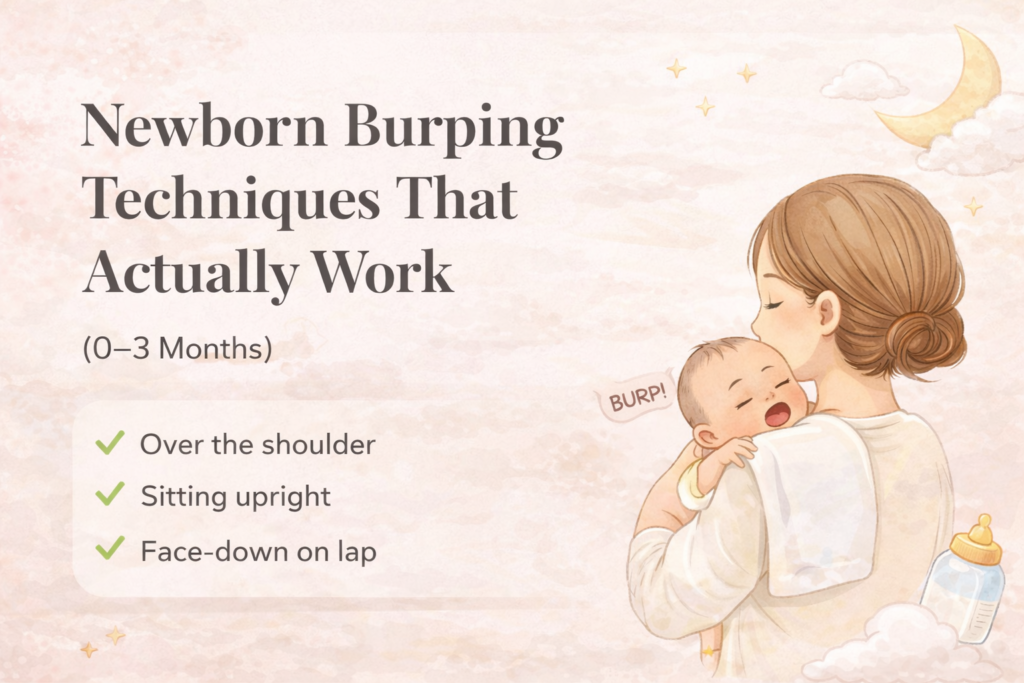
🍼 3 Newborn Burping Techniques That Actually Work
1. Over-the-Shoulder Method (Most Effective)
This is the most popular and reliable technique.
👉 How to Do It:
- Hold your baby upright against your shoulder
- Support their head and neck
- Gently pat or rub their back
💡 Pro Tips:
- Use a burp cloth (spit-up is common)
- Keep baby’s tummy lightly pressed against your shoulder
- Try gentle circular rubbing instead of only patting
✅ Best For:
- After full feeding
- Sleepy babies
2. Sitting Upright Method
Great for babies who don’t burp easily on the shoulder.
👉 How to Do It:
- Sit your baby on your lap
- Support chin and chest with one hand (not throat)
- Lean baby slightly forward
- Pat or rub the back
💡 Pro Tips:
- Keep spine straight (don’t slouch baby)
- Gentle pressure helps release air
✅ Best For:
- Babies with frequent gas
- Bottle-fed babies
3. Face-Down on Lap Method
Very effective but less commonly used.
👉 How to Do It:
- Lay baby face-down across your lap
- Keep head slightly higher than chest
- Support head carefully
- Gently pat or rub back
💡 Pro Tips:
- Always ensure baby can breathe comfortably
- Use slow, gentle movements
✅ Best For:
- Stubborn gas
- Babies who resist other methods
🌙 How Long Should You Try to Burp?
- Try for 5–10 minutes
- If no burp comes, it’s okay to stop
- Try again later if baby seems uncomfortable
👉 Not all babies burp every time—and that’s normal.
😢 Signs Your Baby Needs to Burp
Watch for these cues:
- Crying after feeding
- Squirming or restlessness
- Pulling legs up
- Arching back
- Refusing to continue feeding
👉 These signs often overlap with gas discomfort.
⚠️ Common Burping Mistakes to Avoid
Avoiding these can make a HUGE difference:
❌ Patting Too Hard
Gentle taps work better than force.
❌ Wrong Position
Baby should be slightly upright—not flat.
❌ Skipping Mid-Feed Burps
This can lead to more gas buildup.
❌ Rushing the Process
Some babies take time—be patient.
💛 Extra Tips That Actually Help
✔ Keep baby upright for 10–15 minutes after feeding
✔ Use slow feeding (especially bottle feeding)
✔ Check bottle nipple flow (too fast = more air)
✔ Avoid overfeeding
✔ Try different positions if one doesn’t work
🔗 Related Reads (Boost Engagement)
👉 Why Your Baby Won’t Stop Crying (11 Common Reasons)
(Gas is one of the biggest causes 👶)
👉 Newborn Wake Window Guide (0–3 Months)
(Sleep + gas are closely connected)
🌟 Final Thoughts
Burping is a small step that makes a big difference.
Once you find the technique that works for your baby, feeding becomes easier, crying reduces, and sleep improves.
Remember: Every baby is different—experiment and stay patient 💛
📌 Save This Guide
Save this so you can quickly remember the right technique during feeding time 📌
Explore More
Looking for more baby name ideas and parenting tips?
Check out:
- Baby Feeding Guide
- Baby Essentials Checklist
- Unique Baby Girl & Boy Names
- Newborn Care Tips
- Postpartum Recovery Guides
- Healthy Racipes for mom
Recent Posts –
- 100+ Rare & Unique Cancer Baby Girl Names (With Meanings)

- Signs You’re Healing Well After Delivery (Normal vs Not) – Complete Guide for New Moms

- Diapering Essentials Checklist for New Moms (Complete Newborn Guide)
- Diapering Essentials: What NOT to Buy for Your Newborn (Save Money Guide)
- Best Baby First Food List (6–12 Months) | Healthy & Easy Baby Food Guide